Substantial Completion Certificate: What It Means and Why It Matters August 2026
Substantial completion in construction sets key legal and financial clocks. Learn what triggers it, what the AIA G704 covers, and how to document it. Aug 2026.
The gap between a usable building and a finished one is where a lot of money sits. Retainage, warranty periods, builder's risk coverage, liquidated damages, and statutes of repose are all triggered by the substantial completion date, not final completion. If that milestone is loosely defined in your contract, you're leaving the most important date on the job open to interpretation.
TLDR:
-
Substantial completion means the work is usable for its intended purpose, even with a punch list still open
-
The AIA G704 certificate triggers retainage release, starts warranty clocks, and ends builder's risk coverage on the same date
-
A certificate of occupancy and a certificate of substantial completion come from different sources and may not align automatically
-
The substantial completion date starts statutes of repose, which cut off defect liability after a fixed number of years by state
-
Constructable tracks punch list items, standardizes inspection walkthroughs, and logs RFIs against drawing locations to keep closeout documentation defensible
What substantial completion means
Substantial completion is the point in a project when the work is sufficiently finished for the owner to occupy the building or use it for its intended purpose, even though minor items still need attention. A punch list of touch-ups, minor adjustments, and incomplete finishes can remain open. The core function of the space, though, is ready.
No single statutory definition governs the term everywhere. Meaning varies depending on the contract language and the jurisdiction you are working in, and while many states have adopted standards from the American Institute of Architects (AIA), there is still room for interpretation. What counts as substantially complete on one job may read differently on the next.
The AIA and its role as the industry standard
The AIA gives the term its most widely cited definition:
Substantial completion is the stage in the progress of the work when the work or designated portion is sufficiently complete in accordance with the contract documents so that the owner can occupy or use the work for its intended purpose.
Two documents carry that language into practice. The AIA A201 General Conditions embeds the definition into the contract itself, and the G704 Certificate of Substantial Completion turns the milestone into a signed, dated record. Because so many contracts are built on these forms, the AIA phrasing has become the default reference point across the industry.
The AIA is not the only source, though. EJCDC (Engineers Joint Contract Documents Committee) and DBIA (Design-Build Institute of America) standard form agreements use materially similar language, which keeps the core concept consistent even when the paperwork differs.
What triggers substantial completion and who determines it
The process starts with the contractor. When a contractor feels a project is substantially complete as outlined in the contract, they notify the architect and request a certificate of substantial completion. The architect then inspects the work to confirm it meets the standard.
That inspection produces a list; any items still needing correction get documented as a punch list, and the contractor works from it toward final completion.
Under AIA A201, the architect holds the call, deciding whether the milestone has been met. DBIA contracts differ in that they rely on a joint inspection by the owner and the design-builder.
The certificate of substantial completion
The G704 does more than mark a date. Because it is a standard form, it outlines the practical handoffs that come with the milestone, from retainage release to insurance and security responsibilities. Everyone signs off on the same record.
A completed certificate captures:
-
The date of substantial completion
-
The punch list of items still needing correction
-
A deadline for finishing those remaining items
-
Responsibility assignments for utilities, security, maintenance, and insurance
Any scope adjustments settled before this point should also be reflected in a change order to keep the contract record clean at certification.
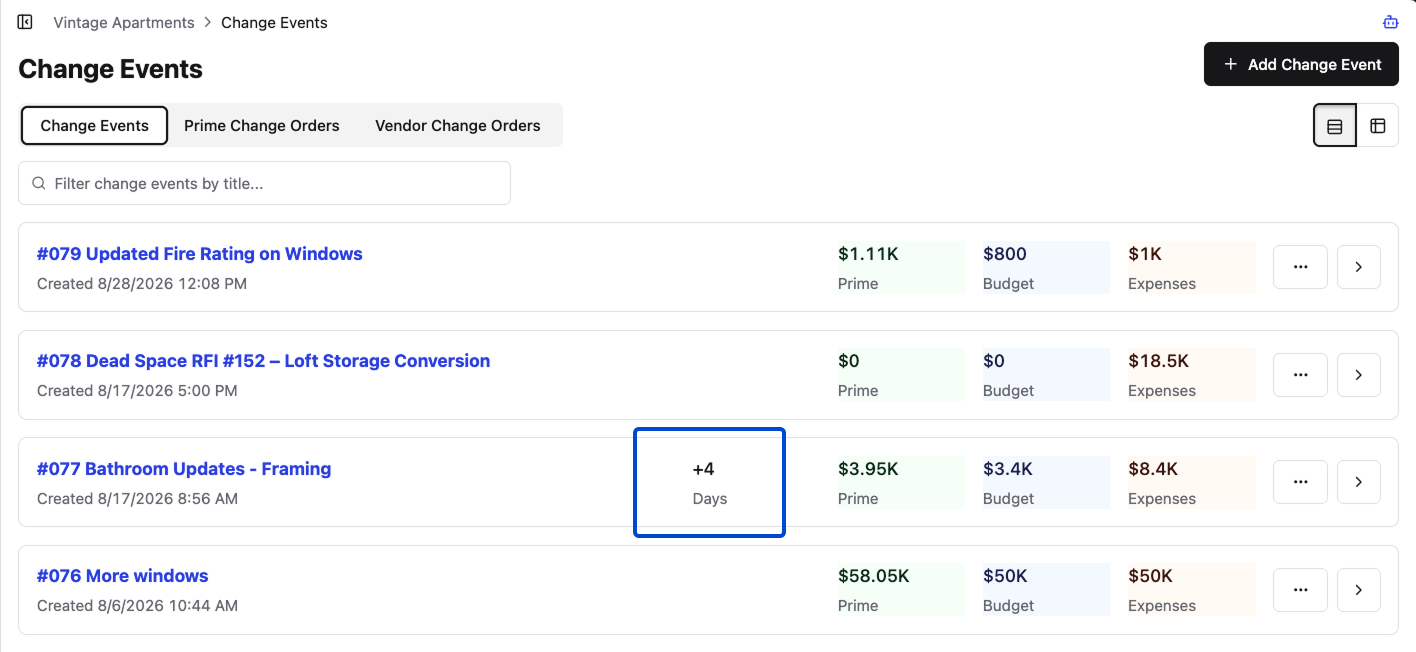
Constructable clearly marks schedule impacts on Change Events
The form also settles who carries the risk once the owner takes over. Coverage and liability shift at this point, and a signed certificate removes the guesswork about which party owns what.
One thing worth knowing about the AIA library: substantial completion certificates are more common than closeout forms. The AIA offers three substantial completion forms keyed to the contracting method, but none for closeout.
What changes the moment substantial completion is certified
Certification sets off a chain of obligations keyed to the same date. Once signed, several clocks start and responsibilities move.
-
Retainage release: Reaching substantial completion triggers the release of retainage, the portion the owner held back, usually a sizable sum the owner must be ready to pay.
-
Warranty clock: Many contracts state warranty obligations begin at issuance, so the claims limitation period starts here, not at final completion.
-
Builder's risk coverage: In most documents, the policy typically ends at this point, with property coverage shifting to the owner.
-
Liquidated damages: Delay damages generally stop accruing.
-
Defect claim windows: Statutes of limitations and repose begin running from this date.
Substantial completion vs. final completion
The two milestones are separated on one axis: how much work remains. Substantial completion confirms that the project is usable for its intended purpose, while minor items remain open. Final completion certifies that all contract items are complete, the punch list is closed, and the contractor has no remaining obligations.
| Criteria | Substantial completion | Final completion |
|---|---|---|
| Readiness | Usable for intended purpose, minor work remains | All contract work fully done |
| Punch list | Still open | Resolved |
| Owner status | Takes possession, financial obligations begin | Accepts fully finished work |
| Contractor obligations | Ongoing until closeout | None remaining |
The gap between the two typically runs 30 to 60 days, sometimes longer on complex projects.
Substantial completion vs. certificate of occupancy
Two documents get conflated here, and they come from different places. A Certificate of Occupancy (CO) is issued by a local building inspector and certifies that the building is ready for use. The certificate of substantial completion is a contractual record between the project parties.
The standards for issuance run close, but they may not line up. A building inspector may even require the certificate of substantial completion before granting a CO. Some contracts tie the substantial completion date to CO issuance, which removes the ambiguity, though the link is not automatic.
Substantial completion and legal liability: statutes of limitations and repose
The certified date carries weight well beyond closeout. Two legal clocks are set to it, and they behave differently.
The statute of limitations begins running when a defect is discovered, giving an owner a set period to bring a claim from that point. The statute of repose serves as a hard outer deadline, cutting off liability entirely once a fixed number of years have passed, whether or not anyone has spotted the defect.
That outer deadline ties directly to the milestone. Generally, the statute of repose expiration date is based on the project's substantial completion. In California, it runs 10 years from that date.
Timelines vary widely from state to state, so the applicable number depends on where the work is located. Treat the date as a legally binding record.
The substantial completion checklist
No two projects share the same finish line, so there is no catch-all objective checklist that determines when work is sufficiently complete. Treat the checklist as a project-specific agreement, drafted against your contract, not a universal form pulled off a shelf.
Most checklists cover four categories:
-
System commissioning: HVAC, electrical, plumbing, fire alarm, and elevators tested and confirmed operable.
-
Permits and occupancy approvals: Inspections passed and the paperwork the owner needs to occupy in hand.
-
Punch list identification: Every remaining item logged, with nothing left to memory.
-
Responsibility assignments: Who finishes what, and by when.
Nail down the standard before the inspection, and the definition becomes a matter of fact. That is where disputes shrink.
Common disputes and how to protect the substantial completion date
When substantial completion is loosely defined in the contract, the date becomes a point of contention. In delay claims, an unclear point of substantial completion often becomes a point of debate in litigation, because it affects the damage figures and adds to an already costly process.
A few habits keep the date defensible:
-
Document the work state with dated photos and inspection records at the time you claim the milestone. Unresolved design questions are a common culprit, and understanding why RFI management breaks down helps close that gap before the certificate is requested.
-
Send written notice requesting the certificate, not a verbal heads-up.
-
On phased projects or multi-building developments, certify each designated portion separately, so one late building does not cloud the others.
How Constructable supports the path to substantial completion
The path to substantial completion runs through the documentation that precedes it: punch list resolution, inspection records, RFI closure, and closeout paperwork. Constructable supports each of those without pretending substantial completion is a single button.
Quality Lists track punch list items across subcontractors and locations, with each item pinned to the drawing sheet where the work is located (a capability worth comparing against punch list software built for GCs), so nothing floats in a stray spreadsheet. Each RFI is pinned to a drawing location, so every design question has a documented answer tied to the sheet where the work lives, all of it on record before the certificate gets signed.
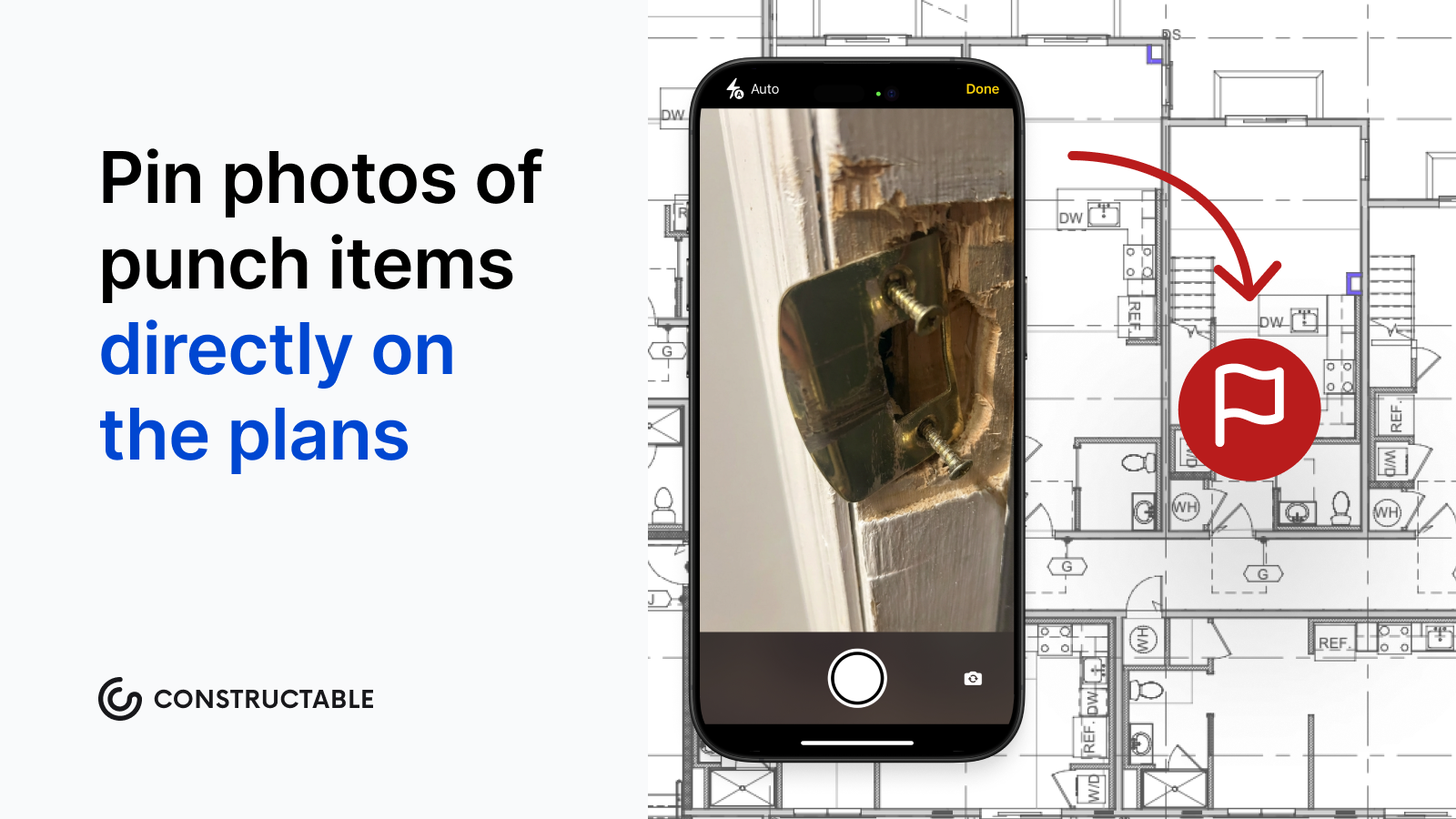
When someone later asks what was finished and when, the AI Answer Engine queries drawings, daily logs, photos, RFIs, and closeout documents in plain language, and every answer links back to its source.
Final thoughts on the substantial completion certificate and what follows
The certificate is just a piece of paper until the work behind it is documented well enough to defend. Every clock that starts on that date, from warranty periods to statutes of repose, is only as reliable as the records you built getting there. Good documentation makes the date a fact, not an argument. Reach out to the Constructable team to see how that trail gets built before the inspector walks the job.
FAQs
What is substantial completion in construction, and how does it differ from final completion?
Substantial completion is the point at which the work is sufficiently finished for the owner to occupy or use the building for its intended purpose, even if punch list items remain open. Final completion certifies that all contract items are complete and the punch list is closed. The gap between the two typically runs 30 to 60 days, sometimes longer on complex projects.
What does the AIA G704 certificate of substantial completion actually cover?
The AIA G704 is a signed, dated record that captures the substantial completion date, the open punch list, a deadline for finishing remaining items, and responsibility assignments for utilities, security, maintenance, and insurance. It also settles which party carries risk once the owner takes possession, shifting builder's risk coverage and triggering the warranty clock. You can find the current form through AIA Contract Documents; the G704 is the standard industry reference for formalizing this milestone.
Substantial completion vs. certificate of occupancy: are they the same thing?
No. A certificate of occupancy is issued by a local building inspector and certifies the building meets code for use. The certificate of substantial completion is a contractual record between the project parties. The standards run close but may not align exactly, and in some jurisdictions, a building inspector may require the substantial completion certificate before granting the CO.
When does the statute of repose begin to run on a construction defect claim?
The statute of repose clock generally starts at the substantial completion date, not when a defect is identified. In California, for example, it runs 10 years from that date, cutting off liability entirely once the period expires regardless of whether anyone has spotted a problem. Because timelines vary by state, the certified substantial completion date serves as a legally binding record that all parties to the project should treat carefully.
How do I protect the substantial completion date from becoming a dispute?
Document the work state with dated photos and inspection records when you claim the milestone, and send a written notice requesting the certificate rather than a verbal heads-up. On phased projects, certify each designated portion separately so one late building does not cloud the others. Nailing down the contractual standard before the inspection is where most disputes shrink.