Construction Bidding for General Contractors: October 2026 Guide
Follow this October 2026 step-by-step guide to bid construction jobs, covering scope review, takeoffs, markup, and proposal submission.
When was the last time you lost a bid and couldn't say why? Maybe you underbid to win, missed an addendum that revised the quantities, or priced the drawings while a scope gap hid in the specs. Most bidding losses trace back to a broken process, not bad math, so let's fix the system, one step at a time.
TLDR:
-
Estimating tells you what a job costs; bidding wraps that in markup, terms, and a proposal the owner sees.
-
Track your bid-hit ratio to pick jobs: public hard bids average 10-20%, negotiated work 30-50%.
-
Find work through plan rooms, referrals, paid networks, and free federal, state, and local bid portals.
-
Read the full package, verify takeoff scale, and price materials, labor, equipment, and subs by cost code.
-
Constructable organizes bid packages by scope, runs takeoffs on the drawings, and imports bids from a PDF.
What construction bidding actually is and why it matters
Bidding is how general contractors win the work that keeps crews busy: a formal offer spelling out price, scope, and terms for an owner.
Estimating and bidding get used interchangeably, but estimating calculates what a job costs you to build, while bidding wraps that number in markup, terms, and a proposal the owner sees. That gap is where margin lives, and a rushed number gets baked into a binding price.
Types of bidding in construction
The delivery method shapes how you price and who you compete against. A few you will run into:
-
Open (competitive) bidding: anyone qualified can submit, common on public work.
-
Closed or invited bidding: the owner hand-picks a shortlist.
-
Negotiated bids: price and terms worked out with one contractor, usually relationship-driven.
-
Hard bids: lowest qualified number wins, scope fixed.
-
Design-build: you carry both design and construction under one contract.
Public and government work adds transparency rules that private jobs skip. Sealed-bid procedures keep every number hidden until the official opening date.
How to find construction jobs to bid on
Finding work to bid comes down to a handful of channels, each trading lead volume for relevance:
-
Plan rooms and bid boards: local builders' exchanges and GC associations post commercial invitations to bid.
-
Private invitations and referrals: repeat clients, architects, and past subs drive the highest-quality leads.
-
Online bidding sites: paid networks like ConstructConnect and BidClerk aggregate broad opportunities; free options like BuildZoom or Houzz Pro surface residential work but demand more filtering.
More leads rarely means better leads. A tight local network usually beats a firehose of mismatched postings.
Where to find government and public construction bids
Public construction spending in the U.S. hit a seasonally adjusted annual rate of $547.8 billion as of August 2026, according to the U.S. Census Bureau, so the market is worth the paperwork it demands. Three free channels cover it:
For federal work, SAM.gov lists every contract opportunity from pre-solicitation to award notice. Each state runs its own procurement portal for agency and DOT work. City and county sites post their own bid pages and are often the least crowded field of the three.
Register your entity and get a Unique Entity ID through SAM.gov before bidding federally. Many state and local agencies add prequalification steps, so clear those early.
How to decide which jobs to bid on
Chasing every opportunity quietly erodes profit, because each bid costs estimating hours whether you win or not. A disciplined bid/no-bid call protects that time.
Track your bid-hit ratio (wins per bid submitted), and use the spread across work types to decide where your hours actually pay off.
| Work type | Typical bid-hit ratio | What drives it |
|---|---|---|
| Hard-bid public work | 10-20% | Lowest qualified number wins, scope fixed |
| Negotiated / relationship-driven | 30-50% | Price and terms worked out with one contractor |
Reading the bid documents and scope of work
Before a number hits the page, read the full package: drawings, specs, addenda, and the contract.
Watch for scope gaps between what the plans show and what the specs call out, addenda that quietly revise quantities or deadlines after issue, and exclusions or allowances that shift cost back onto you. Risk-shifting clauses like no-damage-for-delay or broad indemnification are easy to miss and expensive to ignore.
Resolve conflicts through an RFI now, not a change order later.
How to perform an accurate takeoff
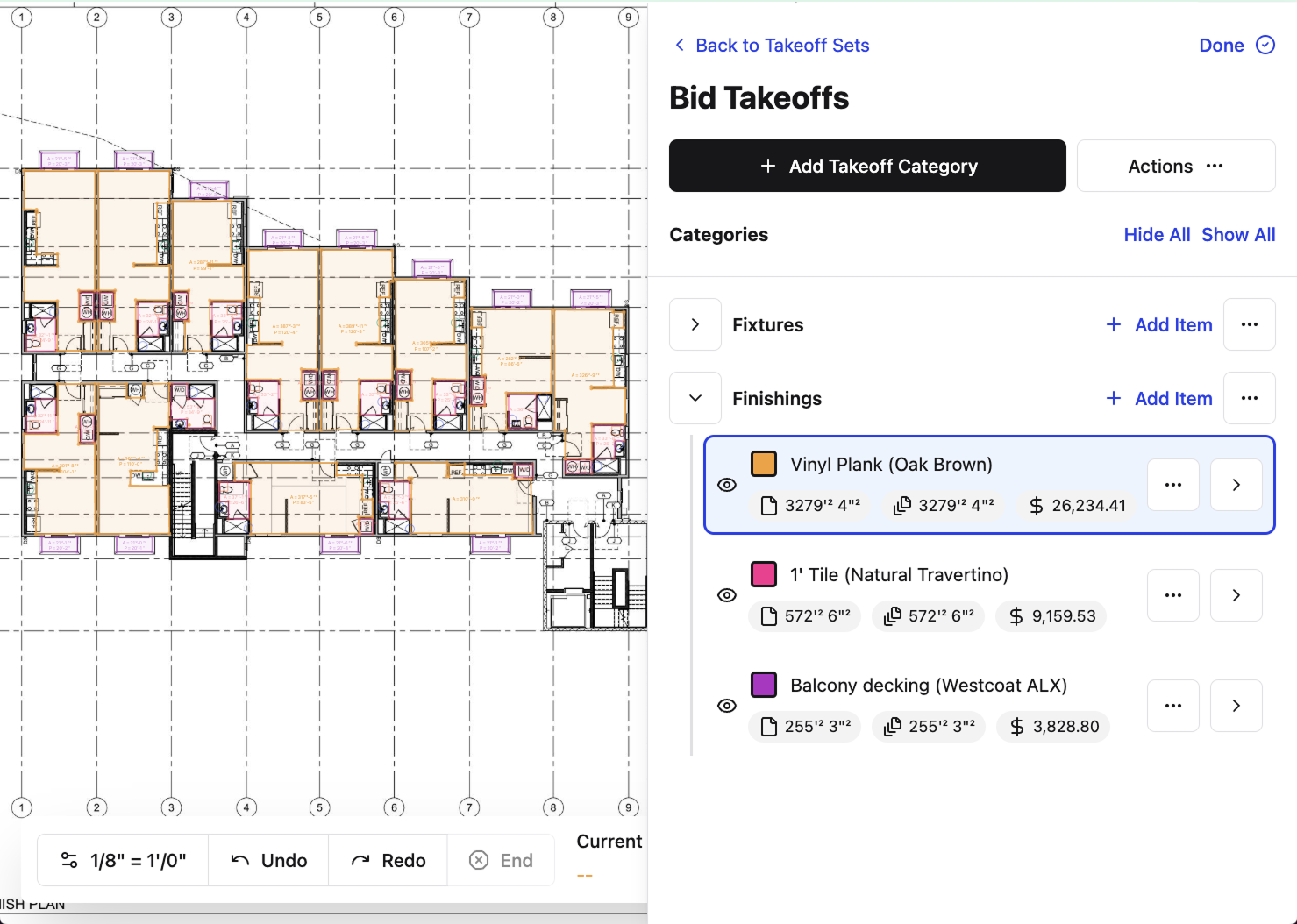
The takeoff turns drawings into numbers: linear feet of pipe, square footage of drywall, counts of fixtures. Every downstream cost rides on these quantities, so an error here compounds through the whole bid.
Manual takeoffs mean scaling off paper plans by hand. Digital takeoffs measure directly on the drawing file, tracking length, area, and count with less transcription risk. Whichever you use, verify the scale before you measure a single line.
Here's a look at the digital takeoffs tool in Constructable:
How to estimate material, labor, and equipment costs
Once quantities are set, assign a price to each. Build the estimate in these buckets:
-
Materials: multiply takeoff quantities by current unit prices, then add a waste factor for cutoffs and breakage. Lumber and steel move fast, so quote recent numbers.
-
Labor: apply a crew's hourly rate against a productivity rate. Burden the wage with taxes, insurance, and benefits.
-
Equipment: owned or rented, priced per hour, day, or week.
-
Subcontractor quotes: firm numbers for scope you do not self-perform.
Structure every line by cost code so the estimate rolls into your budget.
How to add overhead, profit, and contingency
Your direct costs are only half the number. The markup layer keeps the job from losing money:
General conditions and overhead—supervision, trailers, insurance, and office costs—get spread across your active work. Profit is the margin you set, tightened under heavy competition and widened on riskier scope. Contingency adds a buffer for unforeseen conditions, sized to how much the documents leave unknown.
Shave these too thin to win, and you have underbid before the first shovel.
How to bid as a subcontractor
Bidding as a sub flips the perspective: you respond to invitations from GCs instead of the owner, and you price only your trade. Because of this, a few habits can keep you competitive.
Answer invitations fast—even a quick "will bid" holds your spot. Scope tight to your trade and spell out inclusions and exclusions clearly so nothing gray lands on you later. Bidding the same package to several GCs raises your odds without adding much work.
A reusable bid template standardizes inclusions, exclusions, and unit prices, so nothing gets dropped under deadline.
How to assemble and submit a professional bid package
A complete bid package presents your number and proves you understood the job. Most include:
-
Cover letter: a short introduction with your total price and validity period.
-
Scope narrative: what you are including, in plain terms.
-
Priced schedule of values: costs broken out so the owner can read your math.
-
Qualifications and exclusions: assumptions, allowances, and what your price leaves out.
-
Required forms: bid bonds, licensing, insurance certificates, and owner-specified attachments.
Follow the submission format exactly, whether sealed hard copy or portal upload. Late means disqualified, so build in a buffer before the deadline.
How to bid specialty jobs like construction cleaning
Specialty scopes like post-construction cleaning price differently than full-project work. You bid the square footage, not the structure. Most cleanup jobs run in three phases:
-
Rough clean: debris haul-off and gross removal after framing.
-
Final clean: detailing surfaces, fixtures, glass, and floors before handover.
-
Touch-up: last-pass polishing right before the owner walks.
Price per square foot on predictable interiors; bill hourly when debris volume is unknown. Walk the space first, since photos hide the real mess.
Common bidding mistakes that cost contractors money
Most bidding losses trace back to broken process, not bad math. The usual culprits:
-
Underbidding to win, then eating the gap for the whole job.
-
Reusing a formula without a second set of eyes on the number.
-
Missing an addendum that revised quantities after the package went out.
-
Pricing the plans while ignoring scope gaps buried in the specs.
-
Submitting, then never confirming receipt or tracking bidder responses.
Each one is a hole in the workflow. Fix the system that let it through.
Using bidding and preconstruction software to win more work
Preconstruction software cuts the manual drag out of bidding. Good construction management software organizes bid packages by scope, tracks where each bidder stands, fires off automated reminders, and runs takeoffs on digital drawings.
Match the tool to your gap.
Bid management tools run your own invite-compare-award process. Networked directories add a subcontractor pool to source bidders you do not already know. Estimating and takeoff tools handle quantities and pricing, with some offering automated measurement.
Free apps cover smaller jobs; commercial work usually warrants paid features.
How Constructable simplifies the bidding process for mid-size GCs
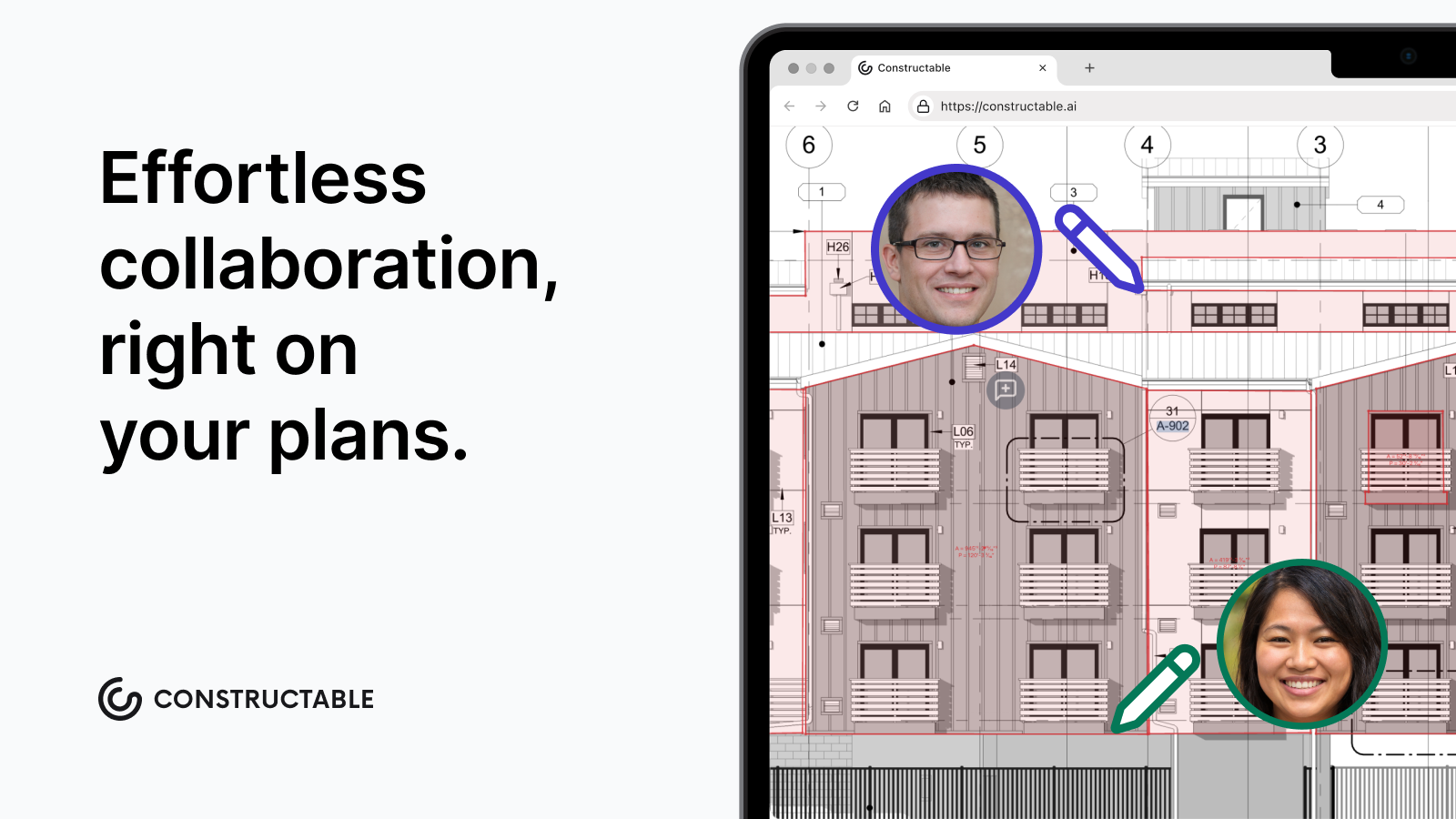
Constructable pulls bidding into one connected system. Pre-Construction tools organize bid packages by scope, capture per-scope amounts per bidder, and give each bidder a landing page to view plans and submit online. Takeoffs happen on the drawings, with color-coded measurements and one-click export to estimating. Assistive AI bid import populates fields from an uploaded PDF, so you skip retyping. You can even collaborate on drawings in real time.
The right call is fit, not feature count.
Final thoughts on winning construction bids
The contractors who win consistently treat bidding as a system, not a scramble. Read the scope closely, bid the jobs that pay off, and build in buffer before every deadline. If you want that process in one place, book a demo and check the fit.
FAQ
What's the best construction bidding software for a mid-size GC?
The best fit depends on your gap: bid management tools run your own invite-and-award process, networked directories add a subcontractor pool, and estimating tools handle takeoffs and pricing. Constructable covers bid management and takeoffs in one connected system, organizing packages by scope and giving each bidder a landing page to submit online, which suits mid-size commercial GCs consolidating scattered spreadsheets and email threads.
How do I find government and public construction jobs to bid on for free?
Use three free channels: SAM.gov for federal opportunities, each state's procurement portal for agency and DOT work, and city or county sites for local bids. Register your entity and get a Unique Entity ID through SAM.gov before bidding federally, and clear any prequalification steps early since many state and local agencies require them.
Should I bid every job I can find, or be selective?
Be selective, because each bid burns estimating hours whether you win or not. Track your bid-hit ratio and lean toward work where the math pays off: hard-bid public work averages 10-20% wins, while negotiated and relationship-driven jobs can clear 30-50%.
How do you bid a job as a subcontractor?
Follow the steps in the subcontractor section above: respond fast, scope tight, bid to multiple GCs, and use a reusable template.
How do you bid post-construction cleaning jobs?
See the specialty jobs section above for the three-phase breakdown; key rule: price per sq ft on predictable interiors, hourly when debris is unknown.