What Is a Subcontractor? Role, Responsibilities, and How GCs Work With Them (June 2026)
Learn what a subcontractor is, their role in construction, and how GCs manage sub relationships. Covers classification, agreements, and more. June 2026.
You work with subcontractors on every project. Electrical, plumbing, mechanical, framing, concrete, drywall, roofing, site work, and specialty trades that vary depending on whether you're building ground-up commercial, tenant improvement, or residential work. The taxonomy is clear: subcontractors hold contracts with you, not the owner, and you stay accountable for their work.
The distinctions between subcontractors, contractors, employees, and independent contractors matter for tax treatment, workers' compensation, and IRS classification. Agreements need to cover scope, payment terms, insurance, and change order procedures. Compensation varies by trade specialty, geography, and business structure.
What separates jobs that finish on time and on budget from those that don't is whether your subs can get answers fast, pull up the right drawings when they need them, log scope changes in real time, and move through the payment process without constant follow-up. The definitions don't slow projects down. The coordination gaps do.
TLDR:
- A subcontractor contracts with the GC, not the owner, and handles a specific trade scope while the GC stays accountable for the whole project.
- Misclassifying a worker as a sub instead of an employee can trigger back taxes and penalties; the IRS tests behavioral and financial control to determine status.
- Subcontractor earnings range from $40K to over $100K annually, depending on trade specialty, geography, and business structure.
- Strong subcontractor agreements define scope, payment terms, schedule, and change order procedures before disputes surface mid-project.
- Constructable gives subs unlimited access at no per-user cost, with offline drawings and AI pulling answers from specs and logs to close documentation gaps before formal change orders.
What Is a Subcontractor? Definition and Role in Construction
A subcontractor is a company or individual hired by a general contractor (GC) to execute a specific scope of work on a construction project. The GC holds the prime contract with the project owner and carries full responsibility for delivering the entire project. A subcontractor holds a separate contract with the GC, not the owner, and covers a defined trade scope within that project: electrical, plumbing, mechanical, framing, concrete, drywall, roofing, and dozens more, depending on project type.
Subcontractors don't work directly for the owner. They work for the GC, who stays accountable for the whole job. That chain of responsibility shapes how contracts are structured, how payments flow downstream, and who answers when something goes sideways on site.
In short, the GC coordinates the whole job. Subs execute the trades.
What each party controls
| General Contractor | Subcontractor | |
|---|---|---|
| Contract with | Project owner | General contractor |
| Responsible for | Entire project delivery | Defined trade scope |
| Manages | Schedule, subs, coordination | Own crew and materials |
| Carries | General liability, performance bond | Trade-specific liability |
| Paid by | Owner (per contract) | GC (per subcontract) |
A supplier is worth distinguishing here, too. Suppliers provide materials but take no responsibility for installation or field performance. A subcontractor supplies labor, and often materials, and owns the result of that work.
Types of Subcontractors in Construction
Construction projects pull in a wide range of skilled trades, and no two jobs look exactly alike. The subs involved in a ground-up commercial building differ substantially from those working on a residential remodel or a data center fit-out. That said, most subcontractors fall into a handful of recurring categories that GCs plan around on nearly every project.
The core trades
- Concrete and masonry subs handle foundations, flatwork, structural walls, and hardscape. On large commercial jobs, these contracts are often among the earliest awarded and the largest by dollar value.
- Framing and carpentry subs cover structural and finish wood framing, including rough carpentry for walls, floors, and roof systems, as well as finish work like millwork and cabinetry.
- MEP subs (mechanical, electrical, and plumbing) are the backbone of any occupied structure. These three trades typically represent the most coordination-intensive work on a job site, requiring constant sequencing among themselves and with the general schedule.
- Roofing subs install waterproofing, membrane systems, metal roofing, and related flashing. Their scope is often weather-dependent, making schedule management particularly important.
- Drywall and insulation subs follow framing and MEP rough-in, and their pace often sets the tempo for interior finish trades that follow.
- Painting and finishing subs work near the tail end of a project, and delays anywhere upstream tend to compress their schedule window.
- Site work and excavation subs prepare the site before vertical construction begins, including grading, underground utilities, and paving.
- Specialty subs cover work that falls outside the core trades: fire suppression systems, low-voltage and data cabling, elevators, glazing, and specialty flooring, among others.
How GCs think about sub-categories
GCs typically sort their subcontractor list by trade scope and contract tier. A first-tier sub holds a direct contract with the GC. That sub may then bring in second-tier subs or suppliers to handle portions of their own scope, which creates the layered structure that defines most large commercial projects. Understanding which tier a sub sits in matters for insurance, lien rights, and payment flow.
How Subcontracting Works: The Hiring and Management Process
GCs invite bids from qualified subs, then level the responses against scope coverage, price, and past performance before making an award. The subcontract gets executed before any work begins, locking in scope, schedule milestones, and payment terms.
Coordination through the job runs via weekly meetings, RFI tracking, and schedule updates. Payment flows through monthly pay applications tied to verified field progress, typically with lien waivers required before or alongside each draw. The GC holds retainage until substantial completion, which is one of the main financial levers a GC uses to keep subs accountable through project closeout.
Subcontractor vs Independent Contractor vs Employee: Classification Matters
Misclassifying a worker goes beyond a paperwork problem. It can trigger back taxes, penalties, and legal liability that outlast the project by years.
The IRS uses a set of behavioral, financial, and relational control factors to categorize workers. The key distinctions:
A subcontractor is a business entity or individual hired by a GC or prime contractor to perform a defined scope of work. They set their own schedule, supply their own tools, and carry their own insurance. The GC controls the outcome, not the method.
An independent contractor is the broader IRS designation that subcontractors typically fall under. In construction, the terms are often used interchangeably, but "subcontractor" is the industry-specific term.
An employee works under the direct control of an employer, follows set hours, uses company-provided tools, and receives W-2 wages with payroll taxes withheld.
The classification tests that matter
The IRS applies a common-law test that weighs behavioral control, financial control, and the type of relationship. California goes further with the ABC test under AB5, which presumes a worker is an employee unless the hiring party can prove otherwise on all three prongs. Texas applies a similar multi-factor analysis but leans toward fewer restrictions than California.
Workers' compensation audits flag field workers coded as subs but controlled like employees, triggering retroactive premium adjustments. Department of Labor investigations surface when subs are paid flat rates below minimum wage equivalents. State tax audits compare 1099 filings against the actual work arrangements documented in contracts and jobsite records.
The practical takeaway for GCs is that the legal relationship has to match the actual one. If you're setting the hours, supplying the tools, and directing the work step by step, a 1099 form does not make that person a subcontractor in the eyes of regulators.
Subcontractor Salary and Compensation: What to Expect
Subcontractor compensation varies widely depending on trade, experience, business structure, and geography. An independent electrical subcontractor in a high-cost metro will land somewhere very different from a drywall crew working rural residential jobs.
For individual tradespeople operating as subcontractors, annual earnings generally run from $40,000 to over $100,000, with specialized trades like plumbing, electrical, and HVAC skewing toward the higher end.
There are a few key elements that shape what a subcontractor actually takes home:
- Trade specialty matters more than most assume. Electricians and plumbers routinely out-earn general laborers or painters, reflecting both licensing requirements and the complexity of the work.
- Business structure affects net income. A sole proprietor subcontractor pays self-employment taxes, funds their own insurance, and covers equipment costs before seeing a dollar of profit. That gross figure on a contract looks different after those deductions.
- Geographic market sets the floor. Labor markets in the Southeast and Midwest tend to run lower than coastal metros, and union vs. non-union environments create further spread.
- Project type and volume determine consistency. A subcontractor locked into a steady commercial GC relationship has more predictable income than one chasing residential one-offs between jobs.
One meaningful difference from W-2 employment: subcontractors typically receive higher gross pay to offset costs that an employer would otherwise cover, including health insurance, retirement contributions, and payroll taxes. The tradeoff is that those protections are self-funded, which is worth understanding before comparing a subcontractor's rate directly against an employee's salary.
What to Include in a Subcontractor Agreement
A solid subcontractor agreement protects everyone involved and keeps disputes from derailing a project. Whether you're a GC putting one together or a sub reviewing one before signing, knowing what belongs in the document saves headaches later.
Here are the elements a well-structured subcontractor agreement should cover:
- Scope of work: A clear, specific description of what the subcontractor is responsible for, including any work explicitly excluded. Vague scope language is where most disputes start.
- Payment terms: The contract amount, billing schedule, retainage percentage, and conditions for final payment. Note any pay-if-paid or pay-when-paid clauses that affect when the sub gets paid.
- Project schedule: Start and completion dates, milestone requirements, and how delays get handled. This ties directly to liquidated damages clauses if the project has them.
- Insurance and bonding requirements: Minimum coverage types and limits the sub must carry, plus any requirements to name the GC as an additional insured.
- Change order procedures: How changes to the original scope get submitted, approved, and priced. Without this, disputes over out-of-scope work are almost guaranteed.
- Indemnification and liability: Who is responsible for what if something goes wrong on site, including property damage or personal injury.
- Termination provisions: The conditions under which either party can end the agreement, and what happens to work completed and payments owed at that point.
How General Contractors Work With Subcontractors: Building Strong Relationships
The relationship between a general contractor and their subcontractors runs the job. GCs rarely self-perform more than a fraction of the work on any given project, so the quality of that relationship directly affects schedule, budget, and final product.
Clear scope definition from the start prevents the "who owns this?" conversations that eat up everyone's time mid-project. The subcontractor agreement should spell out exactly what's included, what's excluded, and where one trade's work ends and another's begins. When RFIs and directives move fast, subcontractors stay productive instead of standing down waiting for direction.
Subs who get paid on time show up reliably and bring their best crews; those who chase invoices every cycle start protecting themselves in other ways. A 2025 Built/Talker Research study found that 70% of contractors regularly face delayed payments, and 60% of subcontractors say a GC's payment reputation significantly affects their decision to bid, meaning slow-pay habits directly shrink a GC's available sub pool.
Coordinating schedules across trades is where most GC-sub friction shows up. A concrete pour that runs late ripples into MEP rough-in, which delays framing, which moves drywall. The GC owns that sequencing and has to communicate changes early.
The best GC-sub relationships look more like repeat partnerships than one-off contracts. GCs who treat subcontractors as extensions of their own team, instead of interchangeable vendors, tend to get better pricing, better crew availability, and fewer disputes when something goes sideways on site.
How Constructable Supports Subcontractor Management for General Contractors
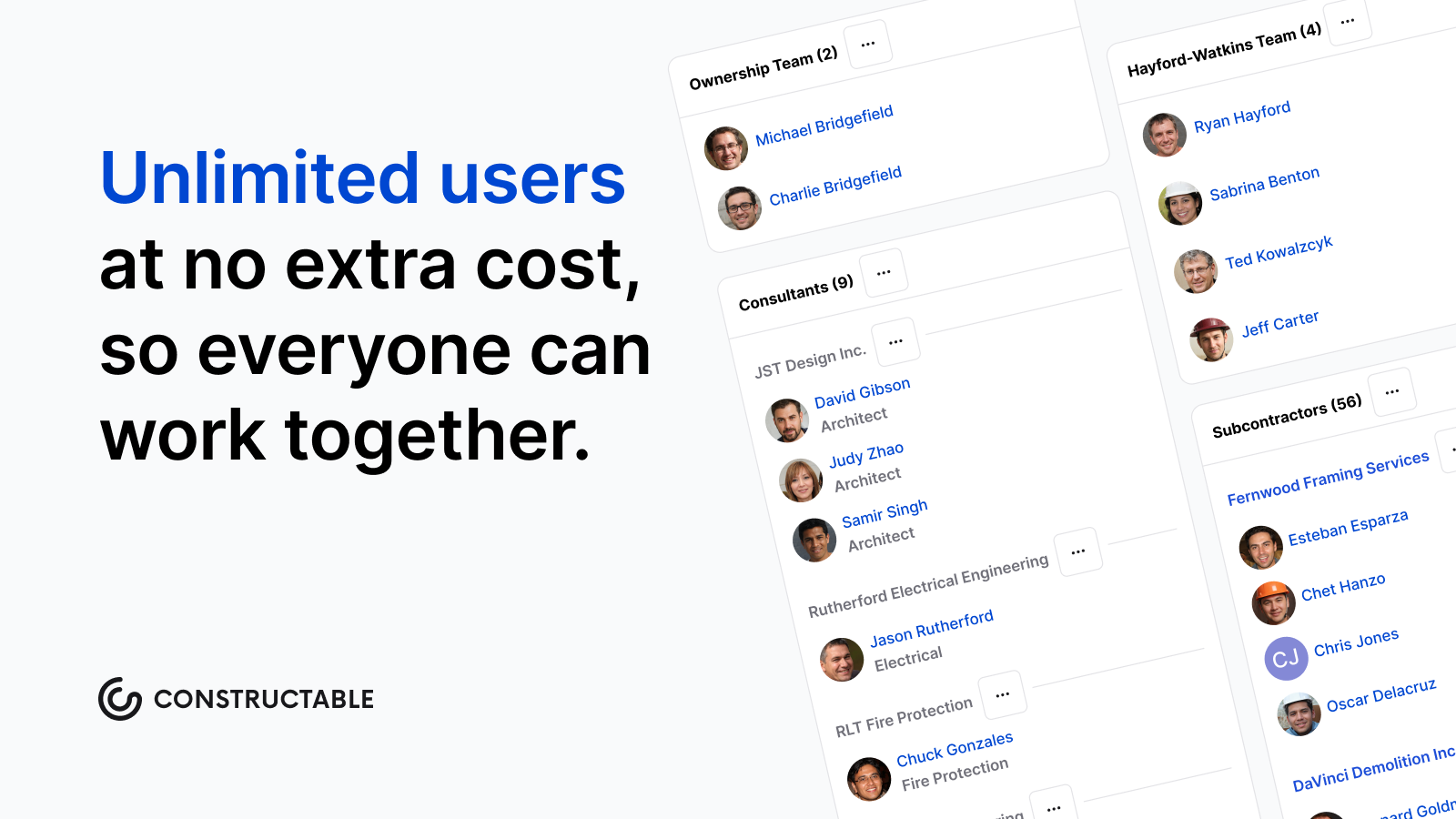
Managing subs across a live project means constant questions, shifting scope, and documentation that has to be right. Constructable gives GCs a single, connected system where subs have unlimited access, so the pricing barrier that forces teams back to email disappears.
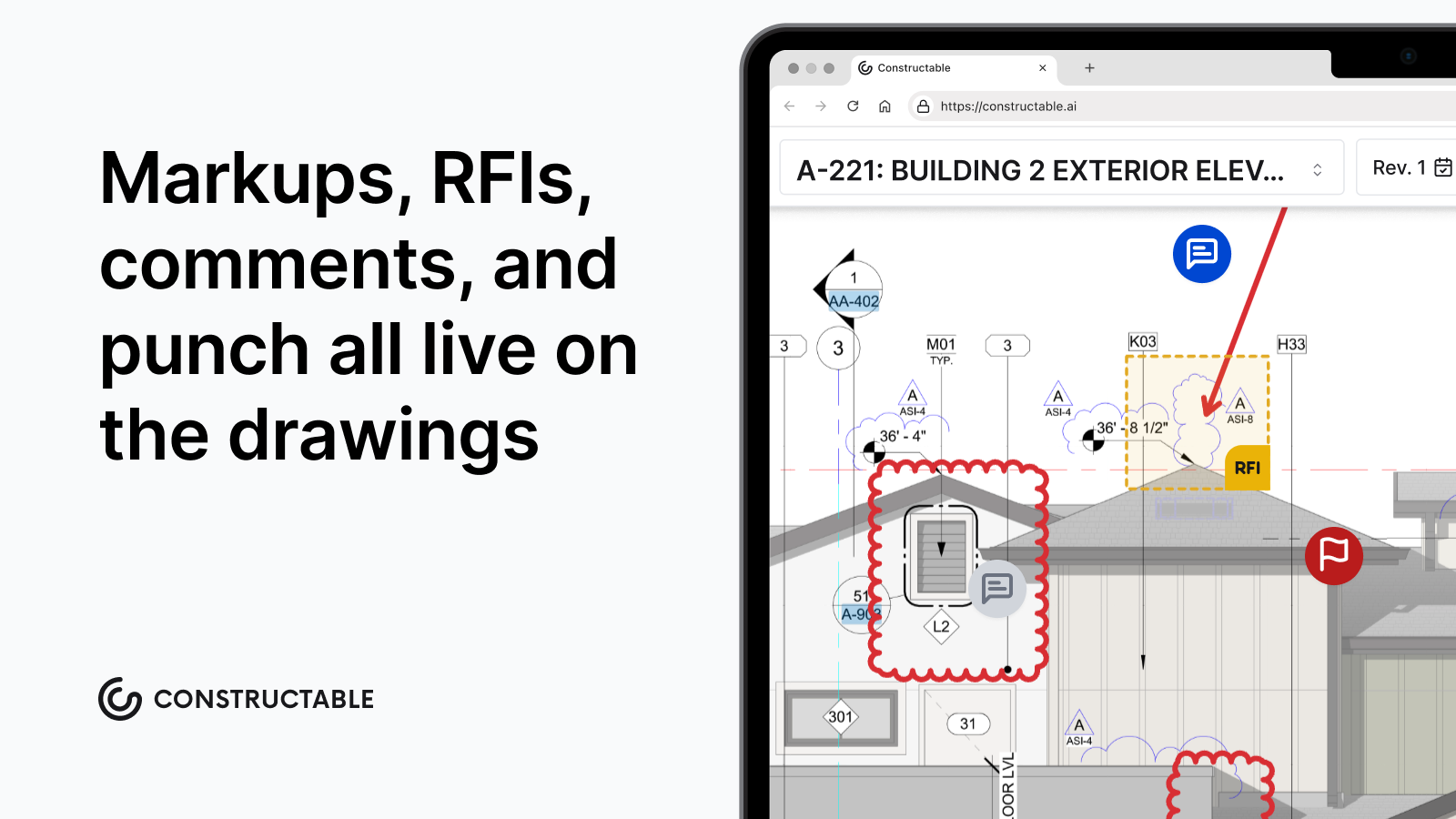
Subs pull up drawings offline, pin RFIs and quality items to exact plan locations, and log change events the moment scope changes, closing the documentation gap that erodes margin before a formal change order ever gets written. The AI Answer Engine pulls answers from specs, drawings, and daily logs without having to dig through files. Every stakeholder works from the same real-time project data, and onboarding averages under 21 days with hands-on migration support, so subs contribute from day one instead of waiting months to get up to speed.
Final Thoughts on Subcontracting in Construction
The subcontractor structure defines how commercial construction actually gets built. GCs coordinate, subs execute, and the quality of that partnership shows up in your schedule, your budget, and the number of after-hours calls you field. Getting scope, payment, and communication right from the start saves you from problems that compound later. If you want to see how a connected system reduces the back-and-forth that slows subs down, reach out to our team.
FAQ
Subcontractor vs contractor: what's the actual legal difference?
A general contractor holds the prime contract with the project owner and carries full responsibility for delivering the entire project, while a subcontractor holds a separate contract with the GC to execute a specific trade scope. This distinction determines liability flow, payment structure, and who is accountable when work goes wrong; the GC remains accountable to the owner even when a sub's work is late or defective.
Is a subcontractor an employee or an independent contractor?
A subcontractor is typically classified as an independent contractor, not an employee. Subcontractors set their own schedules, supply their own tools, carry their own insurance, and control how they complete the work—the GC controls the outcome, not the method. Misclassifying this relationship triggers IRS penalties, back payroll taxes, and workers' compensation issues that can persist for years.
What should I include in a subcontractor agreement to avoid disputes?
Every subcontractor agreement should cover the scope of work (including explicit exclusions), payment terms with retainage percentage, project schedule with milestone dates, insurance and bonding requirements, change order procedures, indemnification provisions, and termination conditions. The clearest agreements spell out exactly where one trade's work ends, and another's begins; vague scope language is where most disputes start.
Can I manage subcontractors without per-user pricing pushing everyone back to email?
Yes. Constructable uses flat-fee pricing with unlimited users across all plans, so subcontractors, owners, consultants, and vendors get full system access at no additional cost. Subs pull drawings offline, pin RFIs to exact plan locations, and log change events the moment scope shifts—without the pricing barrier that forces teams into parallel email workflows and incomplete documentation.
What's the typical salary range for a construction subcontractor?
Individual tradespeople operating as subcontractors typically earn $40,000 to over $100,000 annually, with specialized trades like electrical, plumbing, and HVAC toward the higher end. Subcontractors who own and operate their own crews can earn considerably more, but that gross contract figure looks different after self-employment taxes, insurance, equipment costs, and other expenses that a W-2 employer would otherwise cover.