General Contracting 101: What a GC Actually Does (June 2026)
Learn what a general contractor actually does on commercial projects, from managing subs to handling RFIs and budgets. Complete GC guide for June 2026.
People think they understand what a general contractor does until they actually try to become one. You manage the build, sure. But what about licensing rules that change by county? The difference between holding the prime contract and just coordinating it? What you're supposed to earn when half your income disappears into overhead before you see a dime? Let's get past the surface and walk through what it actually takes to run a GC operation in 2026.
TLDR:
- General contractors oversee the entire build, manage all subs, and carry the risk if budgets or schedules blow out.
- Most states require 4 years of trade experience, passing exams, and proof of insurance and bonding to get licensed.
- Average GC salary is $83,382 per year, with California averaging $98,000 and location affecting pay significantly.
- Constructable gives mid-size GCs one system for drawings, RFIs, submittals, logs, and change orders with AI-powered search.
What Is a General Contractor?
A general contractor is the person or company hired to actually build the thing. On a commercial project, they own day-to-day oversight of the jobsite, manage every subcontractor, and keep the entire operation moving forward.
The architect draws it. The engineers spec it. The GC builds it. Every trade on that site reports through the GC, from concrete and framing to electrical and plumbing. They connect the owner, the design team, city inspectors, and every sub working on the project.
That's the short version; the reality is a lot messier.
What General Contractors Actually Do on Commercial Projects
A GC's job starts before a shovel hits the ground. Pre-construction means estimating costs, running bids, pulling permits, and locking in the schedule with construction management software that keeps it all organized. By the time boots are on site, the real juggling act has already begun.
On a live commercial project, a GC is managing:
- Subcontractor hiring, scheduling, and coordination across every trade
- Material orders, deliveries, and staging logistics so the right stuff shows up at the right time
- RFI and submittal reviews with architects and engineers
- Safety compliance and OSHA requirements
- Budget tracking and change order documentation
- City inspections and regulatory sign-offs
- Quality control from rough framing through final punch list
None of those happens in isolation. Every call a GC makes ripples across the schedule, the budget, or the next trade waiting to mobilize. The owner wants answers, the architect just revised the drawings, and three subs are standing by waiting for direction. That pressure never really goes away.
General Contractor vs Project Manager vs Construction Manager
These three titles get used interchangeably, but they're different jobs with very different levels of exposure.
The GC holds the prime contract with the owner. That means financial and legal risk. If the schedule slips or costs blow out, the GC answers for it directly.
A project manager typically works for the GC. They coordinate schedules, manage documents, and keep communication moving with project management software, but they don't carry contractual liability. The GC does.
A construction manager usually works for the owner as an advisor, overseeing the project on the owner's behalf instead of building it. One exception worth noting: the "CM at risk" model, in which the CM assumes financial accountability much like a GC would.
| Role | Typically Works For | Holds Prime Contract | Carries Risk |
|---|---|---|---|
| General Contractor | GC firm | Yes | Yes |
| Project Manager | GC | No | No |
| Construction Manager | Owner | No | No |
| CM at Risk | Owner (contracted) | Yes | Yes |
Do You Need a License to Be a General Contractor?
Licensing rules vary more than most people expect, and getting it wrong can hold up a project fast.
Most states have a licensing program for general contractors, but fees, experience requirements, and exam structures all vary. As of 2026, 17 states don't require a state-issued GC license at all.
No state requirement doesn't mean no requirement, though. In many of those states, counties and cities fill the gap with their own registration rules. You could be working somewhere with zero statewide licensing and still need a local permit or business registration to legally run that job.
Before signing a prime contract in any new market, check both state and local requirements. Next Insurance maintains a state-by-state GC license requirements guide that covers experience thresholds, bond amounts, and exam rules for all 50 states.
General Contractor License Requirements by State
Most licensing programs require:
- 4 years of verifiable trade experience, sometimes split between field and management time
- A designated qualifying party who passes both a trade exam and a business/law exam
- A surety bond, with amounts that vary widely depending on the state
- Proof of general liability and workers' comp insurance
- Financial statements showing the business can carry a project
- A background check on the qualifying party
The application itself is usually the easy part. Experience documentation and exam prep are where most people underestimate the timeline. Plan for several months at a minimum. Some states take that long just to process the paperwork before a license is ever issued.
General Contractor Salary: What GCs Actually Earn
Pay varies more in this trade than most people expect. The national average is $83,382 per year, with the middle 50% of earners falling between $63,601 and $110,626, per Glassdoor data as of May 2026.
For GCs operating their own business, those salary figures can get complicated quickly. Income shows as business profit, not salary, and what you actually take home depends on project volume, overhead, and what's left after paying subs and suppliers.
How Location Impacts General Contractor Earnings
Where you work matters as much as how long you've been doing it. A general contractor running jobs in San Francisco is living in a different financial world than one doing the same work in Nebraska.
California & Texas
California GCs are among the highest paid in the country. The average general contractor salary in California sits around $98,000 per year, with experienced contractors in the Bay Area or LA clearing well above that.
Texas offers strong earning potential with lower overhead. GC salaries in Texas average around $80,000 to $85,000 annually, and the volume of commercial and residential work keeps pipelines full.
Top General Contracting Companies in the United States
A few of the most recognized names in U.S. contracting operate at a scale most people never see up close. Here's where each tends to focus:
| Company | Primary Focus |
|---|---|
| Turner Construction | Commercial, healthcare, education |
| Bechtel | Infrastructure, energy, government |
| Kiewit | Heavy civil, industrial |
| DPR Construction | Technical, healthcare, life sciences |
| Whiting-Turner | Commercial, institutional, retail |
Most commercial GC work happens well below this tier. Regional firms in the $20M to $500M range make up the backbone of the industry, and that's where the majority of projects get built.
How to Become a General Contractor
Most GCs don't start as GCs. They start in the field, spend years learning how projects actually get built, and eventually take on the business side once they know what they're managing.
The realistic path looks like this:
- Work in a trade or construction role for at least 3-4 years. Field experience gives you credibility with subs and the kind of judgment you simply cannot get from a textbook.
- Learn estimating and contracts. Bidding work is a skill in its own right. Get comfortable with takeoffs, scopes of work, and what you're signing before you sign it.
- Meet your state's licensing requirements. That means documenting experience, passing trade and business law exams, and submitting financial statements.
- Get bonded and insured before touching any prime contract. General liability and workers' comp are non-negotiable, and most owners will not hand you a contract without proof of both.
Managing Construction Projects Without the Chaos
Running a commercial project means juggling drawings, RFIs, submittals, daily logs, photos, and change orders simultaneously, while keeping everyone aligned. Most GCs manage this across four or five disconnected tools, which means duplicate data entry, lost context, and people working off outdated information. All-in-one construction platforms can help solve this problem.
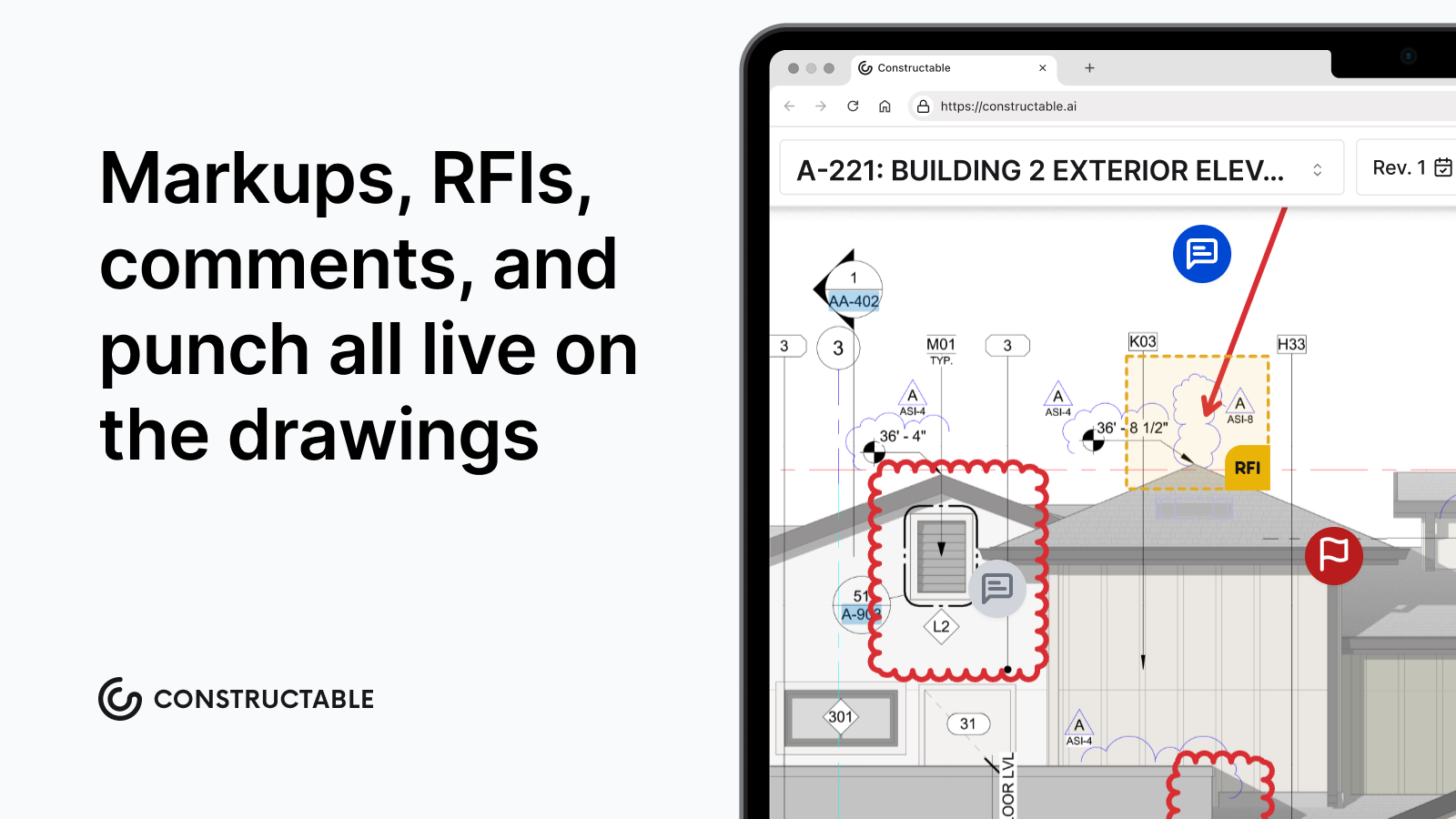
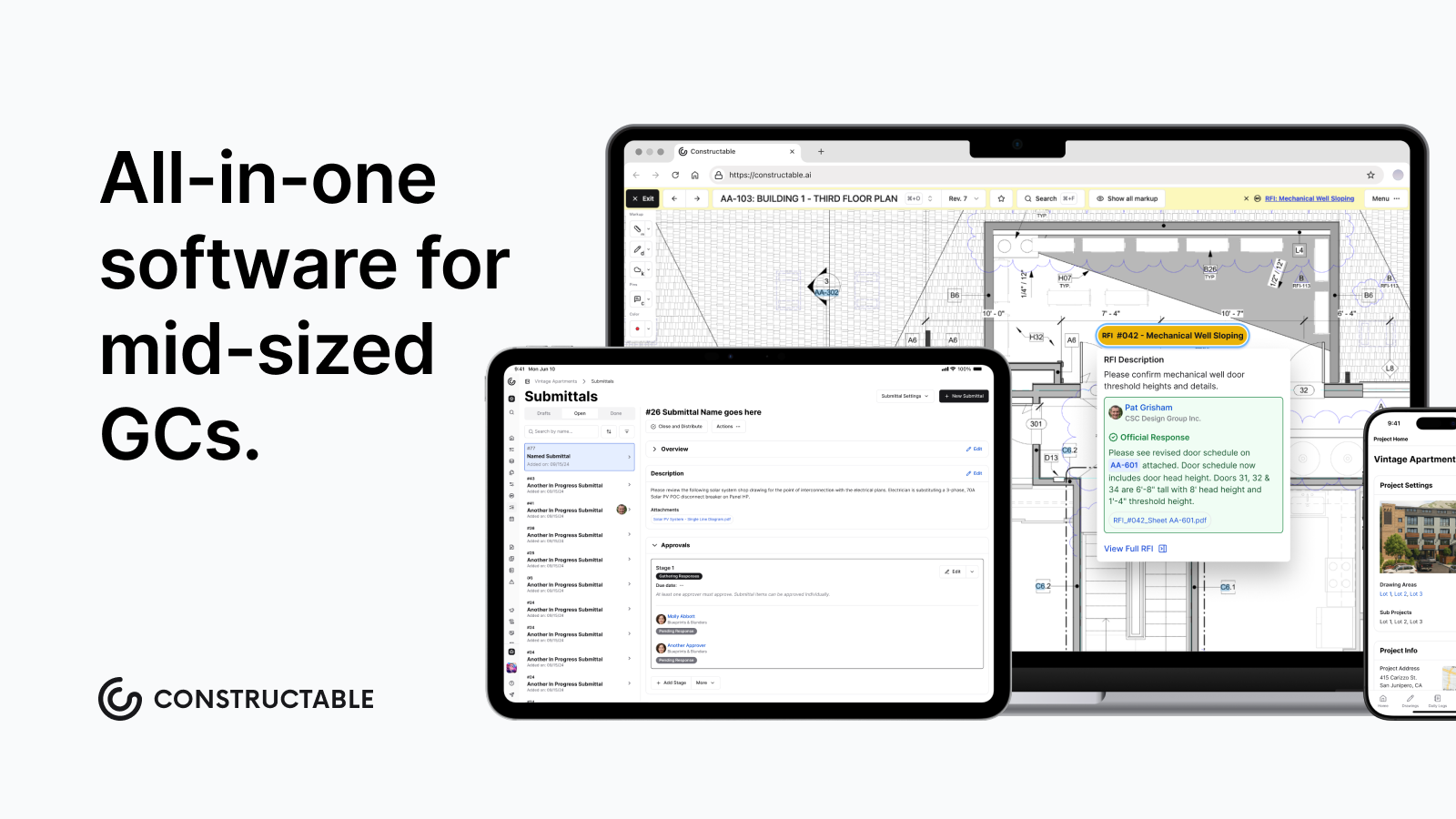
It is exactly that problem which Constructable was built to solve. One system for the full project lifecycle, from bidding to closeout, where RFIs connect to drawings, photos link to plan locations, and change orders tie back to budget line items. Ask a question about your project and get an answer with the source attached, no digging required.
Constructable is built for mid-size GCs running $20M to $150M in annual volume, bringing full project management capability without the enterprise complexity nobody asked for.
Final Thoughts on General Contracting Work
General contracting is one of those jobs where the chaos never really stops; you just get better at managing it. You're coordinating subs, answering RFIs, tracking budgets, and keeping inspectors happy while three people wait for your call. We think managing all that shouldn't require four disconnected systems and constant data entry. If you're running $20M+ in annual volume and want to see how Constructable fits into your operation, let's talk.
FAQ
Do you need a license to be a general contractor in 2026?
It depends on your state. Most states require a GC license, but 17 don't have statewide requirements. Even in those states, counties and cities often have their own registration rules, so always check both state and local requirements before signing a contract.
General contractor vs construction manager: what's the actual difference?
A general contractor holds the prime contract with the owner and carries financial and legal risk for the project. A construction manager typically serves as an advisor to the owner, overseeing the project instead of building it, though a "CM at risk" assumes financial accountability similar to that of a GC.
What's the fastest way to meet general contractor license requirements?
Most states require 4 years of verifiable trade experience, passing both trade and business law exams, a surety bond, and proof of insurance. The exams and paperwork are straightforward—documenting your experience is what takes time. Plan for a minimum of several months from application to issued license.
How do general contractor salaries compare across California and Texas?
California GCs average around $98,000 per year, with Bay Area and LA contractors often clearing well above that. Texas GCs average $80,000 to $85,000 annually, with lower overhead and steady commercial and residential volume keeping work consistent.
Can you manage RFIs and submittals without jumping between five different systems?
Yes. Modern project management software built for GCs can connect RFIs directly to drawing sheets, link submittals to budget line items, and tie change orders back to the original scope; all in one place with AI-powered search to find answers without digging through folders.