Construction Change Directive: Complete Guide for June 2026
Learn construction change directives in June 2026: how CCDs differ from change orders, when to use them, cost tracking methods, and dispute prevention.
Construction change directives put work in motion before the pricing is settled. Unlike change orders that require everyone's signature upfront, CCDs give owners and architects the authority to direct immediate work while negotiations continue separately. They exist for time-sensitive situations: exposed foundations that are failing, MEP conflicts that surface during installation, or owner requirements that shift before you can finalize a standard change order.
The challenge isn't whether to proceed, since most contracts require it, but how to track costs and preserve your negotiating position when final pricing happens later. This matters now more than ever: construction labor productivity fell over 30% since 1970, even as overall U.S. economic productivity doubled, underscoring the critical role of disciplined change management for project success.
TLDR:
- A construction change directive lets owners direct work immediately without agreed pricing
- CCDs differ from change orders: work starts before terms finalize, then converts once settled
- Use CCDs when delays cause more harm than proceeding with uncertain costs
- Track costs daily from the start by separating labor, materials, and equipment by directive number
- Constructable groups CCDs with related change orders and link them directly to drawings and RFIs
What Is a Construction Change Directive?
A construction change directive is a unilateral instruction that allows owners and architects to direct immediate changes to the work without waiting for the contractor to agree to pricing or schedule adjustments. When a project needs to move forward but the parties haven't reached consensus on the change's cost or timeline, a CCD authorizes the work to start immediately while the paperwork catches up later.
Construction Change Directive vs Change Order: Key Differences
The difference comes down to control and timing. A change order requires everyone's signature before work starts. You negotiate the price, agree on the schedule impact, and document everything before starting. Both parties sign off, then work proceeds.
A construction change directive flips that sequence. The owner or architect can direct you to start immediately, even without agreed-upon pricing or a schedule. You proceed while negotiations continue in parallel. The CCD converts to a change order once terms are settled.
| Change Order | Construction Change Directive | |
|---|---|---|
| Approval | Requires mutual agreement | Owner/architect issues unilaterally |
| Timing | Finalized before work begins | Work starts before terms are agreed |
| Pricing | Locked in upfront | Determined after work is underway |
| Use Case | Standard modifications with clear scope and cost | Urgent changes that can't wait for negotiation |
Change orders handle most modifications. CCDs exist when waiting would delay the project or create bigger problems. You'll see them when design issues surface mid-construction or unforeseen conditions demand immediate action.
When to Use a Construction Change Directive
CCDs work best when waiting for full agreement would hurt the project more than moving forward with uncertain terms.
Site conditions that demand an immediate response include failing foundations, contaminated soil, or utilities that appear where drawings show none. Stopping work creates safety risks or compounds damage, requiring action before pricing negotiations finish.
Design coordination issues block progress when trades arrive and their scopes conflict because drawings don't align. Structural steel doesn't match architectural plans, or MEP routing won't fit in the ceiling cavity as designed.
Owner-directed changes with time-sensitive drivers include tenant modifications before lease expiration or jurisdiction requirements that change mid-project.
Key Elements to Include in a Construction Change Directive
Every CCD needs sufficient detail to avoid disputes when it is converted to a change order. The work description requires specificity beyond vague statements like "revise structural steel." Document which members, locations, and modifications are required.
State why you're issuing a directive instead of a standard change order. Time pressure, unforeseen conditions, or design conflicts provide context that protects both parties later.
Reference related documents like drawing sheets, specifications, RFI responses, or submittal comments that triggered the change. These create the paper trail connecting the directive to project records.
Include clear direction to proceed immediately or by a specific date. Ambiguity about timing creates confusion over when costs start accruing.
Outline the pricing method if exact costs aren't available: time and materials with markup rates, unit prices, or cost-plus terms. Even rough estimates give both sides a starting point.
Legal Authority and Contract Requirements for CCDs
CCDs require explicit contract authority to be enforceable. Standard AIA contracts include CCD provisions, but custom agreements often don't. Without clear language allowing unilateral directives, owners cannot compel work on unsigned changes.
- Designated authority: AIA documents grant directive power to the owner and architect jointly. Some contracts limit it to the owner or project manager. Verbal instructions from unauthorized parties don't create valid CCDs.
- Pricing terms: Defined time and materials rates, markup percentages, and documentation requirements prevent disputes when costs remain unresolved.
- AIA framework: Section 7 of AIA A201 covers how CCDs are issued, how pricing disagreements get resolved, and how directives convert to change orders. Review your contract for any modifications to Section 7 before a dispute arises—custom contracts sometimes exclude or narrow these provisions, which limits your options mid-project.
Construction Change Directive vs ASI and Field Orders
Three directive types show up on most projects, and knowing which one applies keeps you from making the wrong move.
An Architect's Supplemental Instruction (ASI) clarifies existing contract documents without changing the contract sum or time. If the instruction requires extra work or money, it should be issued as a CCD or a change order.
Field orders handle minor modifications that don't affect contract value or schedule; most contracts set dollar thresholds for field orders.
CCDs are different. They change scope, cost, and schedule, but the owner issues them before you agree on those impacts.
Cost Tracking and Pricing Methods for Change Directives
Cost tracking for a construction change directive starts the moment work authorization arrives. Change orders can account for a substantial portion of total contract value on large projects, and documentation lapses make those costs hard to recover.
Time and materials pricing requires separating labor hours by worker, equipment hours by asset, material receipts, and subcontractor invoices into distinct categories. Daily logs outperform weekly summaries when cost disputes surface later.
Force account work applies predetermined markup rates spelled out in your contract, covering labor rates, equipment costs, and material or subcontractor markups.
Reconciliation compares your tracked costs with the owner's proposed price adjustment after negotiations conclude. Gaps typically stem from disputed hours, markup disagreements, or differences in scope interpretation.
Common Mistakes That Lead to CCD Disputes
Disputes over construction change directives usually trace back to preventable errors that compound over time. Most blow up during final pricing negotiations when one party realizes they don't have the documentation to support their position.
Vague work descriptions create the widest gaps. Directives that say "repair concrete" without specifying locations, depths, or methods leave both sides guessing what was authorized. Poor cost tracking follows close behind. Missing daily logs, unsigned timesheets, or undocumented material deliveries make reconciliation impossible when you need to justify actual costs against estimates.
How Contractors Should Respond to a Construction Change Directive
When you receive a CCD, acknowledge it in writing right away. Confirm you understand the scope and will proceed, but note you're reserving the right to negotiate final pricing and schedule adjustments.
Track costs from the start. Separate labor, equipment, and materials by CCD number. Daily logs beat memory when pricing talks happen weeks later. Photograph conditions throughout. By the way, Constructable makes it easy to track your non-committed cost receipts as well as maintain well-documented daily logs too.
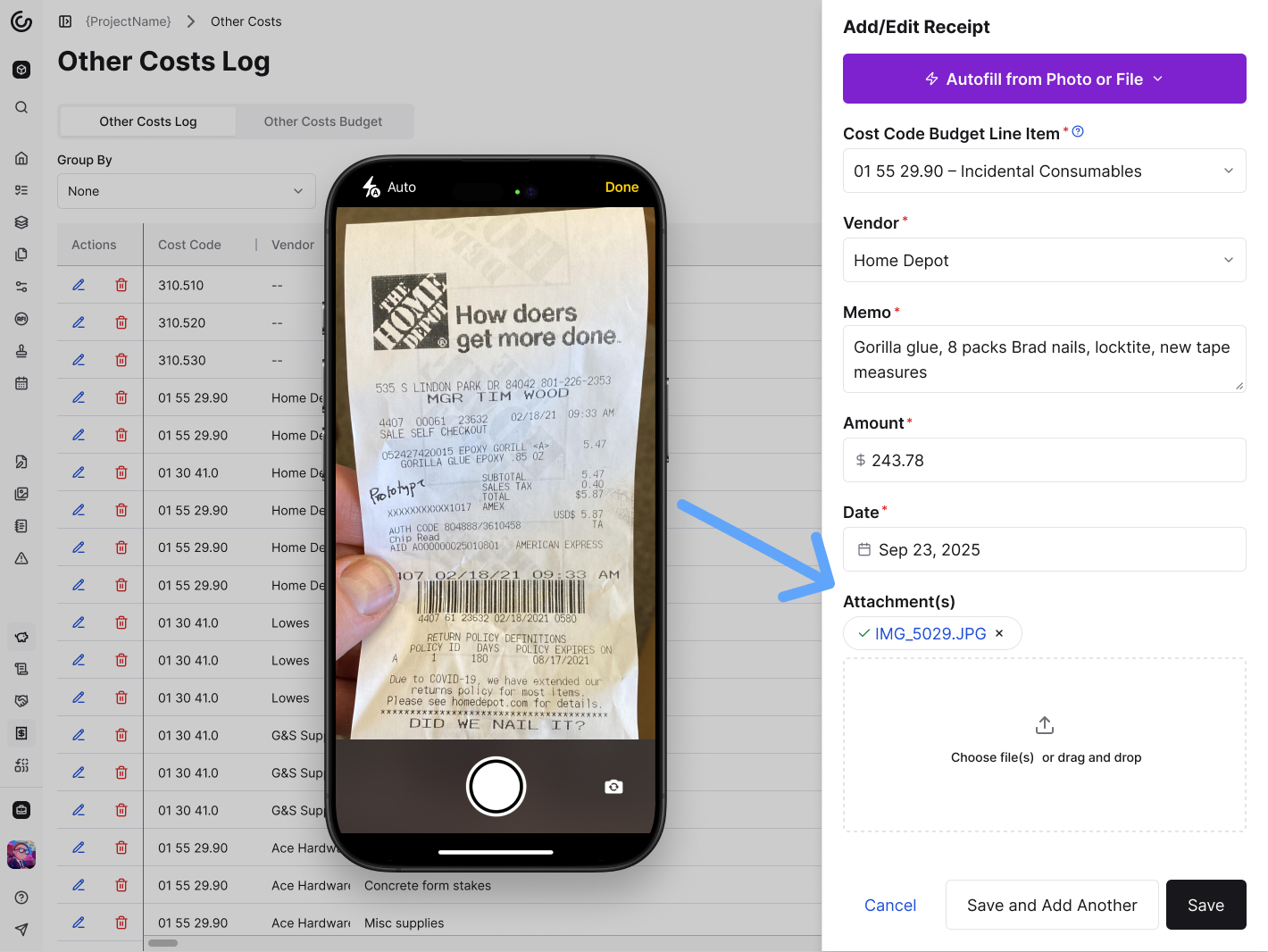
Log your costs by capturing receipts quickly and easily.
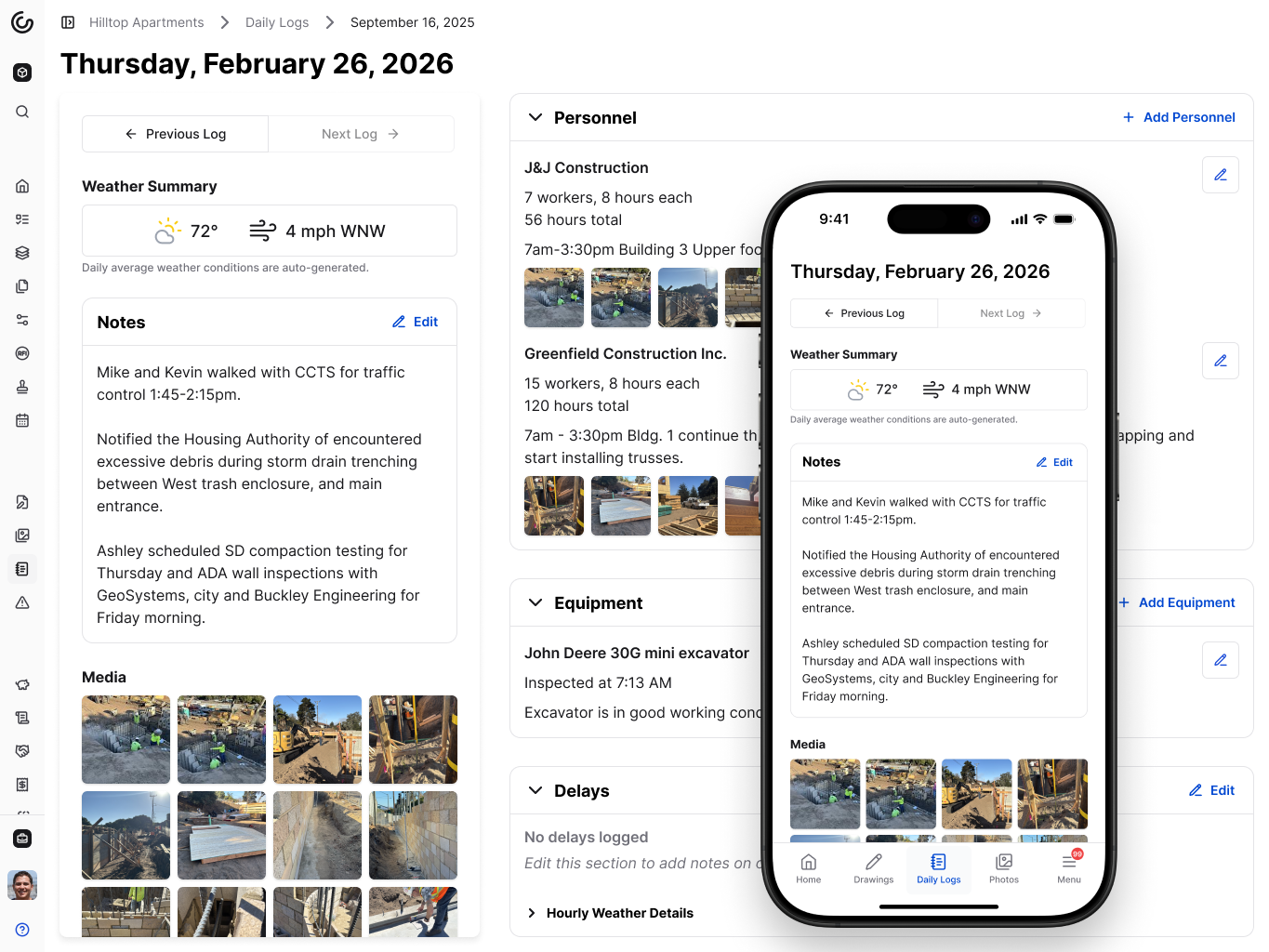
Constructable's Daily Logs feature is robust yet easy to use on your phone while at the jobsite.
Then, submit your proposed pricing within your contract's deadline. Include actual costs, markup per contract terms, and schedule impact. Reference your documentation.
If the owner's adjustment is too low, respond with line-item differences and point to tracked costs instead of general objections.
The Impact of CCDs on Project Schedule and Budget
CCDs create scheduling and budget uncertainty that compounds as multiple directives remain unresolved. Work often starts before pricing finalizes, making cost forecasting difficult when several CCDs overlap.
Much of construction rework stems from miscommunication and poor documentation. CCDs amplify this when scope descriptions lack clarity or when trades start work without clear authorization, leading to delays that cascade through dependent activities and procurement schedules that weren't updated for the changed work.
Best Practices for Managing Construction Change Directives
Set up processes before the first CCD arrives. Define who can issue directives, how pricing gets tracked, and when proposals are due. Waiting until you're in the middle of a crisis creates confusion.
Document everything in real time. Daily logs, photos, and cost records beat memory when negotiations drag on for weeks. Separate each directive's costs from the start, because mixing them creates reconciliation headaches.
Communicate early when you spot scope creep or delays. Waiting to raise schedule impacts until closeout makes owners defensive. Give them numbers while there's still time to adjust.
Use one system to track CCDs alongside change orders, drawings, and daily logs. Jumping between tools loses context when you need to connect a directive back to the RFI or site condition that triggered it.
Managing Construction Changes in One Connected System
CCDs are easier to manage when they live in the same system as your drawings, RFIs, and cost-tracking. Jumping between tools to connect a directive back to the RFI that triggered it or the drawing sheet where the issue appeared wastes time.
Constructable groups related change orders together automatically. When a CCD leads to subcontractor pricing and a matching prime contract adjustment, both stay organized under one parent event. Line items sync across workflows, and everything links directly back to the drawing pins, markups, and RFIs that started the conversation.
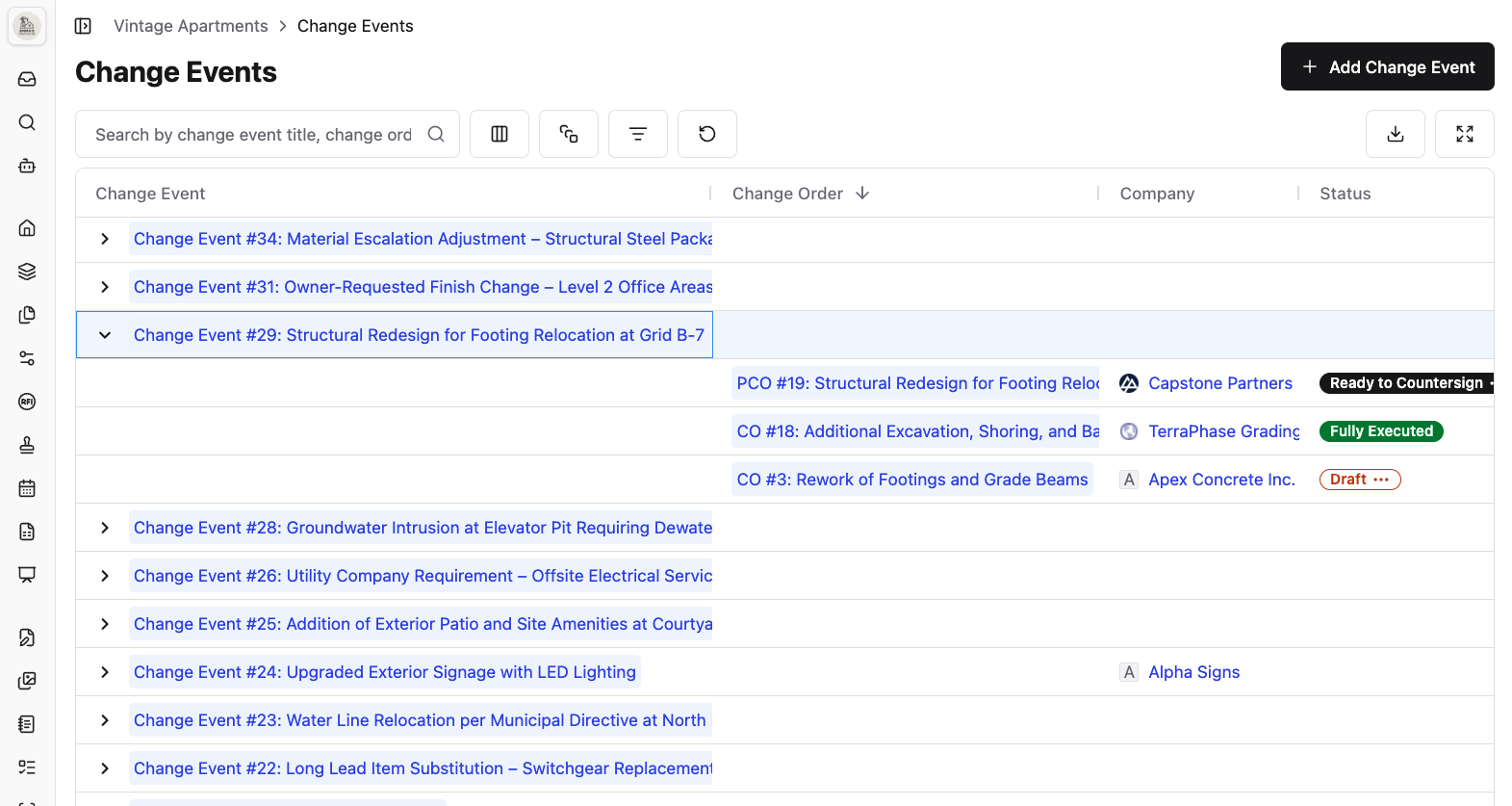
Constructable groups Prime Change Orders and related Change Orders into Change Events and lets you send them for eSignature.
Final Thoughts on Construction Change Directives and Project Control
The difference between CCDs that go smoothly and those that blow up at closeout comes down to documentation. When you manage construction change directives with the same discipline you give safety logs or daily reports, pricing disputes shrink because both sides can see exactly what happened. Your future self will thank you for the time you spend tracking costs and connecting documents today.
FAQ
What's the main difference between a construction change directive and a change order?
A change order requires everyone to agree on the price and schedule before work starts. A construction change directive lets the owner or architect direct work to begin immediately, even without agreed-upon terms, while pricing negotiations continue in parallel.
When should I use a CCD instead of waiting for a regular change order?
Using a CCD when stopping work would create bigger problems than moving forward with uncertain pricing. Think exposed foundations failing, contaminated soil discoveries, or design conflicts blocking multiple trades from proceeding.
Do I have to start work on a CCD before we agree on the cost?
Yes, if your contract includes CCD provisions (like AIA A201 Section 7). The directive authorizes you to begin immediately while tracking actual costs, but you still negotiate final pricing and schedule impacts while work proceeds.
How do I protect myself from cost disputes when working under a CCD?
Document everything in real time: separate labor hours by worker, track equipment daily, save all material receipts, and photograph conditions throughout. Daily logs beat memory when you're backing up costs weeks later during pricing negotiations.
What happens if the owner's proposed adjustment is way lower than my actual costs?
Submit your detailed pricing with line-item breakdowns, reference your tracked costs and documentation, and point to specific gaps between their number and yours. CCDs are converted to change orders once you reach an agreement, so negotiation continues until the terms are settled.