Procore Alternatives Mid-Market (January 2026)
Compare the best Procore alternatives for mid-market contractors in January 2026. Find software that fits your budget and team size without enterprise complexity.
When you're evaluating options that are cheaper than Procore, the real question isn't just about price. It's whether you're trading cost for clunky interfaces, fragmented workflows, or tools that only work for office teams while your supers ignore them. Mid-market contractors running $20M to $150M need software that connects field and office work without requiring an IT department to set it up. We looked at the systems built for teams your size and what trade-offs each one actually makes.
If you're narrowing your shortlist to a Procore alternative for commercial construction, start with the work your field and office teams need to share. Our Constructable vs. Procore comparison brings pricing, migration support, and customer experiences together in one place.
TLDR:
- Mid-market contractors need software that works for field and office without the enterprise bloat
- Procore costs tens to hundreds of thousands annually and requires lengthy onboarding most mid-market teams can't absorb
- Fieldwire handles field tasks but lacks financial tracking, forcing you to manage multiple systems
- Constructable unifies drawings, RFIs, submittals, and daily logs with AI search and transparent pricing
What Is Construction Management Software for Mid-Market Contractors?
Construction management software helps general contractors organize and track the work that happens across their projects—drawings, RFIs, submittals, daily logs, photos, punch lists, and communication. Instead of managing these workflows in spreadsheets, email threads, or disconnected apps, these systems give you one place to see what's happening on every job.
For mid-market contractors running $20M to $150M in annual volume, the need is specific. You're beyond the point where spreadsheets and email can keep up, but you don't need the bloated enterprise systems built for billion-dollar firms with dedicated IT departments. You need software that works for both the PM in the trailer and the superintendent in the field—without requiring a training manual or a consultant to set it up.
The right system replaces the patchwork of tools most teams cobble together. It connects project data so you're not entering the same information twice or hunting through five different places to answer one question. That's the difference between software that adds work and software that actually helps you build.
How We Evaluated These Procore Alternatives
When evaluating alternatives to Procore, we looked at the same things you probably care about when you're deciding whether to switch or stick with what you have.
First is whether the system actually works as one product or if it's just a bundle of separate tools duct-taped together. If you're logging into different modules that don't share data, you're back to the same duplication problem you were trying to solve.
Second is field adoption. If your superintendents won't use it on the jobsite, it doesn't matter how pretty the dashboard looks. We looked at mobile experience, offline access, and whether the interface makes sense to someone wearing gloves.
Third is onboarding speed. Mid-market teams don't have months to spend on implementation or the budget to hire consultants. You need software that works in days, not quarters.
Fourth is pricing transparency. The construction software market is growing fast, but pricing models are all over the map. We looked at whether costs scale with value or punish you for growth.
Finally, we considered whether the tool was designed for office teams or actually built for how field and office work together.
Best Overall Procore Alternative for Mid-Market Contractors: Constructable
We built Constructable to replace the fragmented software stacks mid-market contractors have been forced to live with. Instead of juggling separate tools for drawings, RFIs, submittals, and daily logs, you get one system where everything works together. No duplicate data entry. No jumping between logins. Just software that helps you run better projects.
Our AI-powered search lets you find answers across all your project data in seconds—whether it's buried in a submittal, a drawing markup, or an email thread from three weeks ago.
What Constructable Offers
- Project management with drawings, plan markups, and AI-powered search across all project data
- RFIs, submittals, daily logs, photos, and punch lists in one unified system
- Field and office alignment with workflows designed for both superintendents and project managers
- Transparent, fair pricing not tied to construction volume with hands-on onboarding included
Good for: Mid-market commercial general contractors ($20M-$150M annual volume) who want a single, cohesive system that works for field and office teams without enterprise complexity or pricing.
Bottom line: We deliver the usability and speed mid-market contractors need without forcing teams to manage five different logins or pay for features they'll never actually use.
Procore
Procore is a construction management system designed for enterprise-scale contractors. It has become one of the most recognized names in the industry and offers extensive features across project management, financials, and field operations.
What they offer
- Project management dashboards with document control and financial tracking
- RFI and submittal workflows with mobile field access
- Integration with accounting and scheduling tools
- Unlimited users with pricing based on annual construction volume
Good for: Large general contractors with dedicated project managers, IT support, and annual construction volume exceeding $500M who can absorb higher costs and longer onboarding cycles.
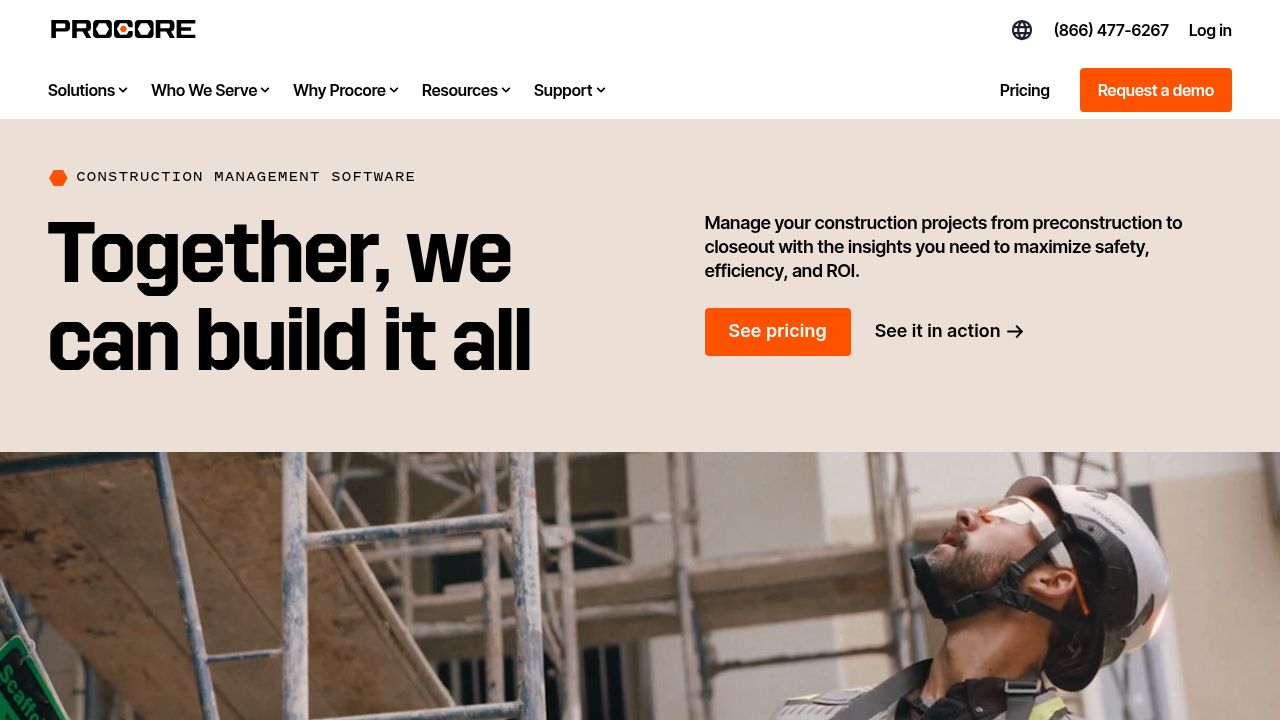
Limitation: Pricing ranges from tens to hundreds of thousands annually depending on company size and feature selection, with customers reporting click-dense interfaces, lengthy onboarding requirements, and a system that feels built for very large organizations rather than mid-market teams.
Bottom line: Procore works well for enterprise contractors managing complex mega-projects, but mid-market teams often find the cost, complexity, and configuration overhead misaligned with their actual needs.
Autodesk Construction Cloud
Autodesk Construction Cloud combines multiple products acquired over time, including BIM 360 and Build. It targets enterprise contractors with complex coordination needs and deep integration into Autodesk's design ecosystem.
What they offer
- Document management with model coordination and clash detection
- RFI and submittal workflows with integration to Autodesk design tools
- Mobile viewer with 3D model support for field teams
- BIM collaboration tools for coordination across design and construction
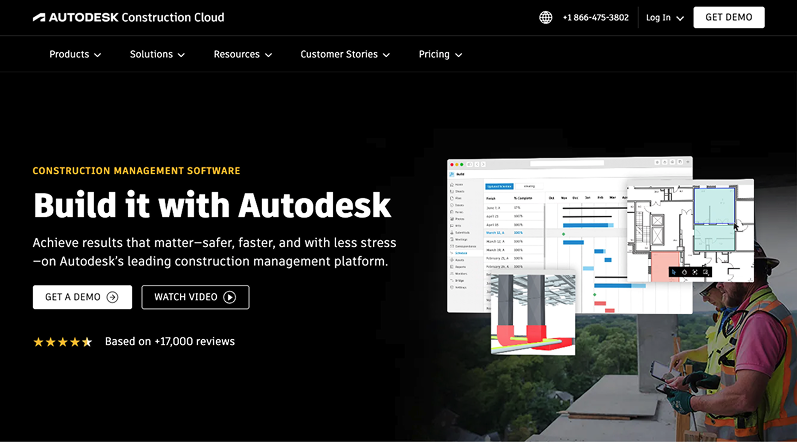
Good for: Large contractors and developers already invested in Autodesk design tools (Revit, AutoCAD) who need tight integration between design and construction workflows and can support longer implementation cycles.
Limitation: The system is built from multiple acquisitions, resulting in inconsistent user experiences across modules, expensive onboarding that often requires third-party consultants, and workflows that feel fragmented rather than cohesive.
Bottom line: Autodesk Construction Cloud makes sense for enterprises standardizing on the Autodesk ecosystem, but mid-market contractors seeking a unified, easy-to-adopt system will find better options.
Fieldwire
Fieldwire is a field execution tool owned by Hilti focused on task management, punch lists, and plan markups. It is designed for field teams and superintendents managing jobsite coordination.
What they offer
- Task management with plan markups and punch list tracking
- Fast mobile plan viewer with offline mode for field access
- Photo capture and annotations linked to drawings
- Forms and checklists for field documentation
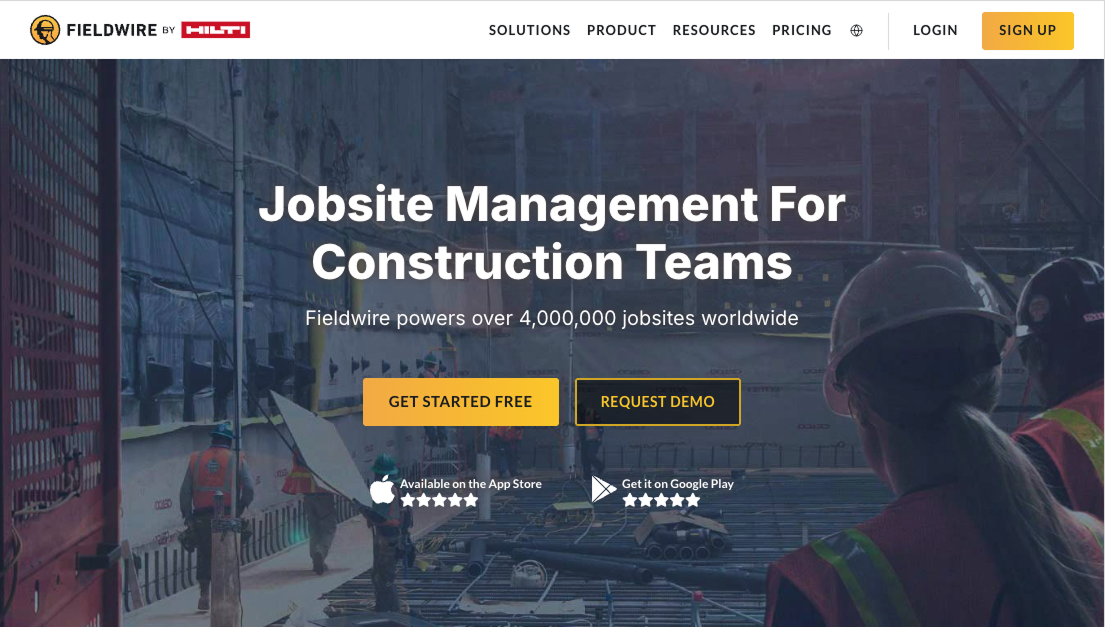
Good for: Superintendents and field coordinators who need a lightweight tool for task execution, plan markups, and punch list management and do not require financial tracking or office workflows.
Limitation: Fieldwire is a point solution without financial tooling, project budgeting, or office-driven project management capabilities, requiring teams to use additional systems for cost tracking and forcing fragmentation across the organization.
Bottom line: Fieldwire excels at field execution but lacks the depth mid-market contractors need for end-to-end project management, leading teams to manage multiple disconnected tools.
RedTeam
RedTeam is a legacy construction management system marketed primarily on price. It covers a broad set of features but is widely perceived as dated and infrequently updated.
What they offer
- Project management with contract and change order tracking
- Cost tracking with integration to QuickBooks Online
- Document management and RFI workflows
- Scheduling with Gantt chart support
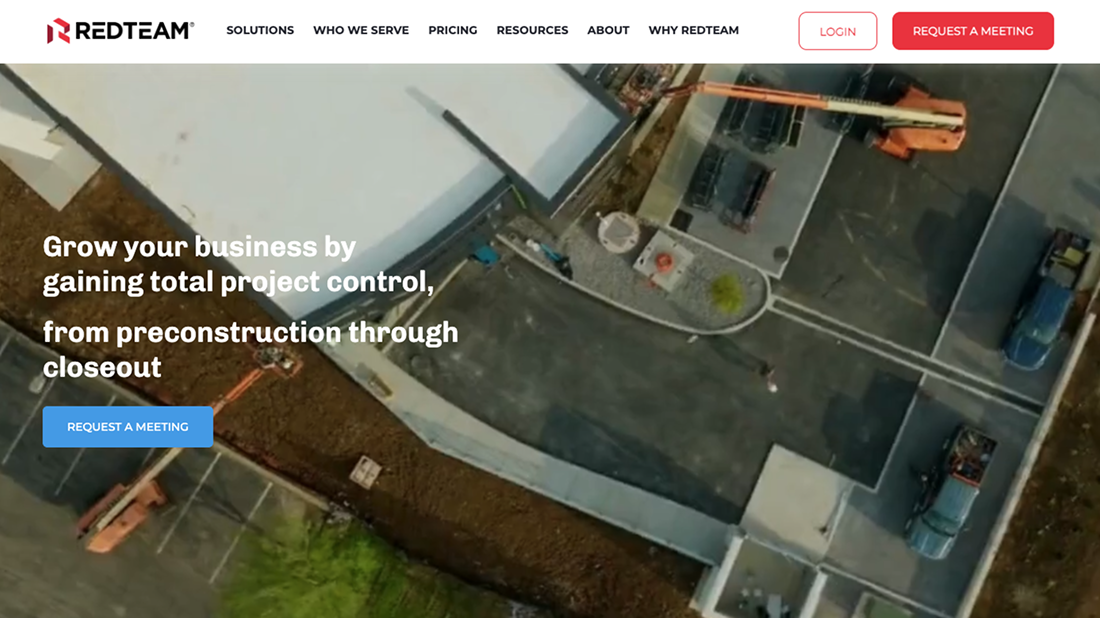
Good for: Cost-constrained contractors seeking the cheapest viable option who can tolerate outdated interfaces, slow product development, and workflows that feel clunky but meet basic requirements.
Limitation: Users report outdated interfaces, infrequent product updates, and workflows that feel awkward or unintuitive, with teams enduring the system primarily because of low cost rather than product quality.
Bottom line: RedTeam is chosen for affordability, but mid-market contractors prioritizing usability, field adoption, and product evolution will find Constructable a better investment.
INGENIOUS.BUILD
INGENIOUS.BUILD is a construction management system that emphasizes financial controls and owner-side reporting. The product structures workflows around financial oversight and multi-project portfolio management rather than day-to-day GC execution.
What they offer
- Financial tracking with budgeting, change orders, and cash flow forecasting
- Project dashboards with multi-currency support for international projects
- Digital RFIs and submittals with approval workflows
- Document management with real-time collaboration
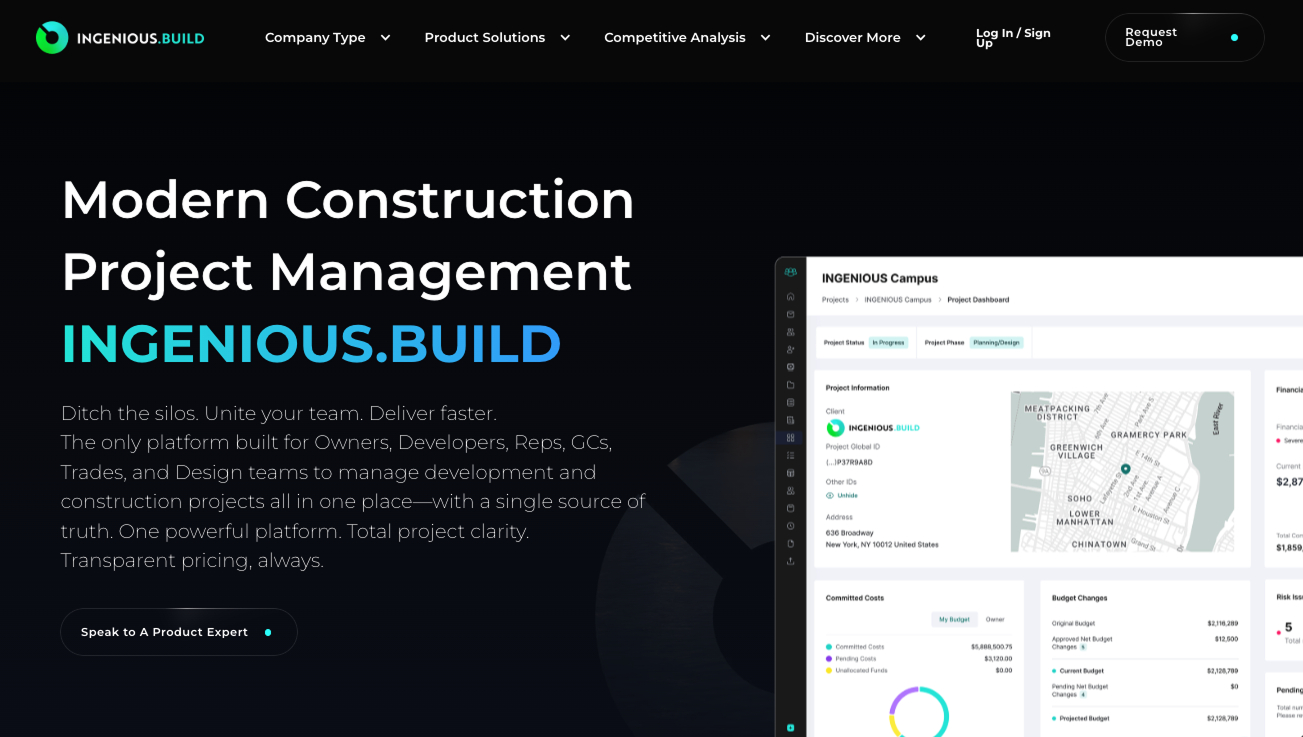
Good for: Real estate developers and owners managing portfolios who prioritize financial oversight and reporting from an owner perspective rather than daily GC execution.
Limitation: The system uses abstract hierarchy that confuses GC users, with workflows requiring you to create objects first and associate them with projects later, breaking how construction teams actually think about their work.
Bottom line: INGENIOUS.BUILD is better suited for owners than general contractors executing daily work, where Constructable's project-first structure matches how GC teams operate.
Feature Comparison Table of Procore Alternatives
| Feature | Constructable | Procore | Autodesk Construction Cloud | Fieldwire | RedTeam | INGENIOUS.BUILD |
|---|---|---|---|---|---|---|
| Built for mid-market contractors | Yes | No | No | No | Yes | No |
| Project management | Yes | Yes | Yes | No | Yes | Yes |
| Financial tracking | Yes | Yes | Yes | No | Yes | Yes |
| Field and office alignment | Yes | No | No | Yes | No | No |
| Native integration | Yes | No | No | No | No | No |
| AI-powered search | Yes | No | No | No | No | No |
| Transparent pricing | Yes | No | No | No | Yes | No |
| Fast onboarding | Yes | No | No | Yes | No | No |
Why Constructable Is the Best Procore Alternative for Mid-Market Contractors
We built Constructable because mid-market contractors deserve better than choosing between overpriced enterprise systems and lightweight point solutions. You're running serious projects that need serious software, but you don't have six months for implementation or the budget for tools designed around billion-dollar portfolios.
Procore has moved upmarket. Fieldwire covers only field execution. Autodesk requires a systems integrator just to get started. RedTeam feels like 2012.
Constructable gives you what you actually need: one system that connects field and office work, pricing that doesn't punish growth, and onboarding measured in days instead of quarters. You get AI-powered search across your entire project, not just better folders. RFIs, submittals, drawings, and daily logs share the same data instead of forcing duplicate entry.
If you're managing $20M to $150M in volume and tired of stitching together software that fights you instead of helping you build, we should talk.
Final Thoughts on Construction Software That Actually Fits
Mid-market contractors have been stuck choosing between too much software and not enough for too long. Systems cheaper than Procore exist, but Constructable delivers both affordability and the depth you need to run serious projects. We built one cohesive system where RFIs, submittals, drawings, and daily logs share data instead of forcing duplicate entry across disconnected tools. If you're managing real volume and need software that respects both your budget and your time, we should talk.
See how teams chose their Procore alternative
Alongside feature comparisons, look at what switching involved for a real team. Read how Holladay Construction Group moved to Constructable and how Clear Group approached accounting integration and team adoption. Use those experiences to shape questions about your own rollout.
FAQ
Which Procore alternative is best for mid-market contractors who need fast onboarding?
Constructable and Fieldwire both offer quick setup, but Constructable delivers full project management in days while Fieldwire only covers field execution. If you need a complete system that works for both office and field teams without months of implementation, Constructable is built for that.
How do I choose between a point solution like Fieldwire and an all-in-one system?
Ask yourself if you're willing to manage multiple logins and duplicate data entry across different tools. Point solutions work if you only need one specific function, but mid-market contractors running $20M-$150M in volume typically need financial tracking, project management, and field coordination working together in one place.
What's the real cost difference between Procore and mid-market alternatives?
Procore pricing ranges from tens to hundreds of thousands annually based on construction volume, while alternatives like Constructable use transparent pricing not tied to your revenue. For most mid-market contractors, you're looking at substantial cost savings without sacrificing the features you actually use.
When should I consider switching from my current construction management software?
If your renewals are consistently increasing without seeing new value created, if you don't feel like your software vendor is a partner, and if you feel like you are wanting to simplify your software processes, then reach out to Constructable. Teams often spend significant time navigating through software that was designed to KYA, versus software designed for collaboration, simplicity and teamwork.
Can I get enterprise-level features without enterprise complexity and pricing?
Yes—that's exactly what modern alternatives like Constructable are built for. You get AI-powered search, unified project data, and full financial tracking without the six-month implementations, dedicated IT requirements, or pricing models designed for billion-dollar portfolios.